
You tell yourself you took the job because you’d be a fool not to. Because, unlike you, the other girls on your dorm floor have a definitive map of their lives: undergrad, grad, early career, marriage, children, career resurgence. You’re surprised they have no doubt the universe will deliver on these imaginings, but you keep this to yourself. The mug from your orientation week kit says you can do anything you want. So do the job fair flyers wheat-pasted to the campus stone walls. And the World War II poster of Rosie the Riveter in her red polka dot bandana on Beth’s side of your dorm room. Beth keeps saying she wants to study law in the UK. After practicing for a few years, she’ll lead a class action suit and attract a judiciary appointment. Some nights, when your dorm room is silent except for Beth’s snoring, the light from the streetlamp casting an uneven glow, Rosie’s bandana seems undone, fallen over her eyes, her mouth open in a silent wail.
“My new boss lets her son throw plush dice at her head. Yours could be running the country!” says Beth, who has suggested you both stay in the city after the spring semester and work as live-in nannies for high-ranking professionals.
Deep belly breathing does nothing to relieve the clenching in your chest as you look at your phone and reread your new boss’s bio:
Martina Preeve, a labour lawyer, will be announcing her decision to run in the upcoming by-election. She loves hiking with her girls and being a treat dispenser to their dog, Shiney.
“If you’re smart, you’ll network the hell out of this opportunity,” says Beth, flopping back on her bed and flicking off the room light.
You think you’re smart. Your high school teachers said you have a keen mind. Bright prospects. They said this to all the girls, though, including the ones who, before French exams, wrote verb conjugations on the insides of their thighs. When Ms. Wilson handed back the mid-term history exams and whispered, “You can take on the world,” there was a probing sympathy in her eye. The same gentle concern flickered in your mother’s gaze when she called you “a good egg.” The same look was there in the stare of Mrs. Shipley, the mother of your first and only boyfriend, Ian, who broke up with you because he said he no longer felt young. All those soft-hearted eyes hound you when you sleep and darken your dreams; in the mornings, you draw them out in permanent marker and try to exorcise them from your mind. That way, you can return to the great echoing enthusiasm for your future.
***
On your first day on the job, Shiney, a small Border terrier, stands outside banging his forehead against the sliding doors. You try to ignore him as you roll the twins’ bathing caps and goggles inside their hooded towels. The treadmill thumps against the tiled floor where Martina is finishing her morning workout. When she called to offer you the position, she said she was “mother and father by choice.” She ran through the twins’ morning and afternoon schedules and weekly meal plan and emphasized that Shiney, the dog, was not your responsibility.
A few minutes later, Martina, who’s talking on her phone and drying her hair with a towel, opens the doors and Shiney scrambles inside.
“That was the third dog walker to cancel this month,” sighs Martina, whose bottom teeth look like little mud houses fallen in on each other. It’s possible that she, too, misplaced and didn’t reorder her lower retainer.
In fact, you think you and Martina look sort of alike, hippies with long torsos. The flesh of her arms is thick, her brown hair dry. You dress similarly, too. Martina wears no makeup, except for the Vaseline glistening on her lips. No jewelry either, save for tiny gold studs, like placeholders that were never replaced. Her ordinariness is a relief, so much so that some of the pressure you feel begins to lift.
“I can take Shiney with us when we go to the pool this morning,” you offer.
Martina mouths “thank you” as Helena skips into the kitchen and wraps her arms around her mother’s waist. Lydia joins in as Martina fluffs their dark curls. Shiney stands on his hind legs and pushes himself into the circle.
“You girls know the drill,” Martina says, lifting the twins onto either hip so that her neck veins bulge and her eyes stare in proud desperation, like the female acrobats in Cirque du Soleil when they balance a male acrobat on their shoulders. Her eyes are firmly set yet relaxed, like she knows what’s ahead because she’ll put it there.
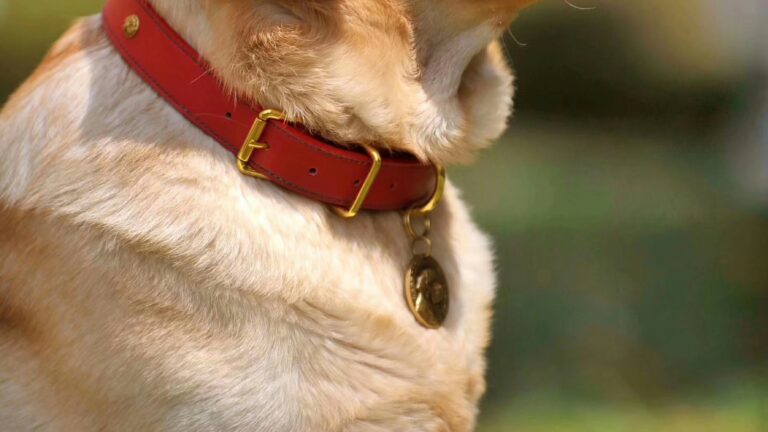
You kneel and hold Shiney back by the collar so that Martina won’t trip on him. You think your new boss is where you could be in fifteen years, give or take. You’d have to break out of your shell and get a little tougher, but you’re thankful that, working all summer for a woman like Martina, you can watch and learn.
***
On the way to the pool, Shiney lies down on the sidewalk and doesn’t budge. He lets himself be dragged on his back, then flips over and seems to grip the ground with his belly.
“He does this all the time,” says Helena, looking up apologetically.
Lydia leans down and lifts his ear. “Bad dog.”
The girls are late for their swim class, and you help them change into their bathing suits and flip-flops and run with them barefoot across the pool deck to stand with their instructor. Then, you head back outside and untie Shiney, who’s drawn crowds with his despairing bark. You set him down next to you on the grass, his legs like shorn tailpipes stretched out behind him, and watch through the glass wall of the community centre as the girls float by on a purple mat.
At the end of class, as the girls get out of the pool, Shiney peels off to the unfenced playing field. Panic strands you in place as you watch a black mastiff chase him along the field edge. As Shiney hurtles back, he doesn’t take his eyes off of you, his ears flat, as you call, “Faster, Shiney, faster!” Scooping him up, not wanting to risk another escape, you carry the dog into the girls’ changeroom and back to the townhouse as the twins hold onto different corners of your T-shirt. Once Lydia and Helena settle in the playroom, you bring Shiney, as per the arrangement, into the living room, where Martina has arranged to work for the afternoon.
When you pull open the double doors, six people holding folders turn toward you.
“Stay a moment,” smiles Martina, stepping forward and pushing a yellow plastic corn cob into Shiney’s open mouth. She introduces her campaign team and says, “I can tell they’re curious. We’re never-ending pollsters here. Tell us an issue close to your heart.”
Martina’s campaign manager, Steve, who appears to be the same age as you, jumps in. “Are you likely to vote, or are you understandably tired of our politics?”
Your hands are warm as you touch the pulse at the side of your neck, which throbs whenever you have to speak on the spot. You try to remember what you wrote on the folded piece of notebook paper in your wallet. There are the three rules of logic, a timeline of historic dates, “concupiscence of the eyes,” and other impressive-sounding phrases and quotes from ancient philosophers, war strategists, and cultural commentators. You’d hoped to fit the important takeaways from your first-year courses onto one piece of paper, so you wrote extra small.
In the tense silence, you search for a place to focus so you can think of something to say. You look past the cabinet, its top covered in framed selfies of Martina and the girls, standing under a pink sky, blowing kisses at a whale fin. You gaze to the far wall, under the drink cart, and find Shiney. He’s deserted his plastic toy and is lying on his side, heaving from some unknown exertion.
“You either vote by voting,” you say, “or you vote by staying home and tacitly doubling the value of some Diehard’s vote.”
Your voice is so quiet, it flings itself back around your ears. Did they even hear you? You lift your sternum, roll back your shoulders. No one speaks. No one asks where you discovered David Foster Wallace.
Finally, the senior policy advisor glances over, casually lowering the mug from his lips. “Well, no one has to worry about you,” he says, and everyone laughs.
No one has said this to you before. For the rest of the day, you feel giddy, off balance.
“You didn’t lie,” says Beth on the phone later that night. “You quoted.”
“Steve will probably lose his job,” you say. “He forgot to enter Martina’s name in the by-election, so she has to do it herself.”
“Of course she’ll replace Steve,” Beth chuckles. “Would the incumbent think twice about firing Steve? It’s Martina’s campaign. She has to be ruthless.”
***
Over the next few days, you discover that Shiney doesn’t sleep. He barks in his crate and wakes the girls. Martina takes him outside, but he barks there, too. The neighbours complain. One threatens to call the city. Shiney’s refusal to walk in the day means he’s left with frenetic late-night energy. His refusal to eat breakfast means he gorges late and has to pee at night. The first dog trainer gave up, and the second one is away in Egypt, and Martina hasn’t found a replacement. Because Shiney can’t be left by himself, Martina works from the living room in the afternoons, with a full view of the yard. That way, she can keep one eye on Shiney should he bark, choke on a daffodil bulb, or escape under the loose planks of the back gate. All of which have happened before.
Martina tells you she’ll be late at the office and to go ahead and order pizzas. Helena and Lydia watch at the front window for the delivery car. Martina uses a pizzeria that still offers thirty minutes or free.
Thirty minutes pass, then forty. When the doorbell rings at the forty-eighth minute, Lydia bounds for the door, and Helena holds out her arms to take the pizza box.
The delivery man wears a black tie under his red nylon windbreaker. He balances the empty insulated bag between his knees as he holds the Interac machine and wipes the screen with a little white cloth.
“Here we are,” the man says, returning the cloth to his pocket. He points to the machine, motioning for you to tap your card.
“I think you might be late,” you say, seeing that the man’s sparse moustache is filled in with sweat beads and his eyes are limpid pools of brown.
“There was a detour around Sherbrooke Avenue,” he says.
He’ll probably have to cover the cost of the pizza, you think, or, worse, he’ll be scolded in front of the other drivers. You know such a thought would never cross Beth’s mind. Beth would ask, “Where’s the extra spicy oil?”
The man remains standing silently in the doorway, the pizza bag under his arm, the Interac machine still somehow balanced in his hand.
You palm the credit card in your pocket, hearing Shiney in his crate that Martina covered with a camping blanket so that he might settle. You wonder what Martina would do. If she’d offer to speak to the man’s manager and explain how no one was at fault.
You push the card back down.
“I have to go,” you say, eyes on the man’s feet, and when he doesn’t move them, you close the door a few inches, until he shuffles back. You push it a few more inches, avoiding his eyes, until it’s shut and he’s gone.
***
That night is hot, and you wake before dawn. You prop yourself onto your elbow and stare out the porthole window. Beyond the garden gate is a wooded path leading down into a ravine where everything—the twins’ blown dandelion seeds, branches broken from the summer storms, coyotes dragging their prey—falls into. Shiney escaped there one night earlier in the week. Martina, wearing a headlamp and a whistle around her neck, found him inside an abandoned tent.
From the window, you notice Shiney on the lawn. Thinking Martina must’ve forgotten about him, you creep downstairs and open the sliding doors. When Shiney sees you, he tears around the edge of the yard, grazing his fur along the fence, then stops to dig in his usual spot by the gate. Noticing he has energy to burn, you search for the squeaky ball that you tried throwing for him during the girls’ screen time in previous days. Each time, he’d refused to run, ambling wearily to the ball, sniffing it wherever it landed. Now you lob the ball high into the dark, and Shiney springs forward. He returns to where you’re sitting on the lawn and drops the ball into your hands. He hasn’t done that before. You gaze at one another. The night breeze blows the fur back off his face and reveals his little red lips, demure and restrained, like the half-hidden lips of your bearded political philosophy professor. You imagine Shiney’s lips moving, although what he says, you can’t know. He looks up, but there are no birds in the sky. No moon. He doesn’t shift his eyes. He stares up balefully, like he’s waiting for help. For a little while, you look at the sky together.
“Is that you?” calls Martina, turning on the deck light.
“I found him outside,” you say, standing up.
Martina walks over. “I wondered why it was so quiet out here,” she says, smiling as if the two of you are in on a joke. “They assured me he had an easy temperament.”
“He’s probably worn out by now,” you say, feeling Shiney’s ear against your leg.
“The girls had goldfish, but they didn’t last,” says Martina, yawning into Shiney’s fur as she picks him up. “Fish, it turns out, can jump.” Her smile turns almost fiendish. “I promised them a real pet so we could grow our family.”
You step ahead and pull open the sliding doors.
“I’m running out of ideas,” Martina says, walking through into the playroom, where together you struggle to keep Shiney, who wriggles and lurches, inside his crate. “No barking,” commands Martina, locking the door.
As you follow Martina toward the stairs, adjusting to her quickened pace, you try to ignore the dog’s whimpers.
***
During the summer weeks, the garden crew arrive like firefighters in their pickup. They descend upon the lawn, weeding, whacking, mowing, and then peel off again. It’s the same fury with the window washers and the housekeeper, Rania, with her hand vac, and the slow-moving ice cream truck with bells like death knells. You absorb a kind of torrid efficiency. You find yourself parroting Martina’s catchphrase, “Jeez Louise.” You roll up your sleeves, even if there are none to roll up, and blow the hair off your face as you slice the girls’ cucumber. You speak to Shiney in short, declarative sentences. “Eat,” you say, pointing to his bowl in the mornings, and “Play,” as you hold the squeaky ball under his nose. You don’t look at the confusion in his eyes; you tell yourself it’s best if you don’t bond.
***
One morning after swim class, as you struggle to unlock the front door while balancing Shiney on your hip, you hear the phone ringing and hurry into the kitchen to answer it.
“Is this a better time?”
You recognize the woman’s voice; it’s the same Red Cross telemarketer who called the day before.
“If you call here again, I will have to contact your boss and file an official complaint,” you say, what you’d once heard a third-year don yell across the dorm hall.
“I’m sorry,” says the telemarketer. “I was under the impression this time was preferable.”
It’s something you might’ve said if you’d been a telemarketer that summer. After you hang up, you stand over the sink and think about how you inflicted pain on an unlucky person. You consider calling back. The 1-800 number is listed on the phone display, and you know the woman’s name is Gita. But Lydia is jumping at your side, asking for the pencil crayons, and you can’t see where Helena has wandered off to, and lunch has to be made.
Later, the ringing starts up again. From the kitchen table, where the girls colour their mandalas and ignore their tuna fish sandwiches, you stare at the phone. You know it’s Gita. Gita, who’s apparently convinced she has you pegged—a sweet, trusting soul, a sucker!
“Are you answering it?” mumbles Lydia, not looking up.
You push back your chair and decide you’ll repeat what you said earlier. You might adjust your tone, stress it’s business, not personal, but you won’t back down. Beth would say you owe Gita nothing. You tell yourself you are the customer.
“Preeve residence,” you say.
No one speaks.
You can hear breathing on the other end, the sucking in of air, someone trying to hold their breath. You’re certain someone’s there. “Why are you calling me? Who are you?”
***
From the porthole window on the top floor, you watch Shiney cavorting under the garden petals. He trots over to one of the sloped beds and sits at the base of the aphid-infested irises that Rania doused with poison and cordoned off with string. You can make out Shiney’s short, black, spotted arms crossed at his wrists. He seems to be looking down, presumably at the aphids climbing the stalks; a white speck enveloped in blackness. You think he’s like a target down on the lawn, not king of his kingdom but prey that could be snatched up by a swooping bird or caught in the jaws of one of the ravine coyotes.
***
After Shiney has stayed up barking three nights in a row, Martina moves his crate and dog bed into her bedroom. Her skin is blotchy with a few small sores. As she stands before her campaign team, her eyes are ringed in black, and one of her eyelids flickers. She’s about to give a dry run of her speech and has asked you and the twins to listen because she wants the younger generation present.
Martina waits for one of the canvassers to set up the camera.
“Whenever you’re ready,” the canvasser says, and Martina begins. “No other citizen should have to lose a loved one because of surgery delays.”
As she switches to her next cue card, others fall from the pack. On her knees, Martina gathers them up. Helena points to a card that fell under the armchair. Standing again, Martina smiles shyly; a look of sheepishness crosses her face before it reddens. You glance down. Keep going, you think. If Martina can’t balance her pyramid of acrobats, what hope is there for you?
“I have a personal goal,” Martina resumes, “because of my father’s avoidable death, to see to it that all of you have swift access to health care.”
Kari, Steve’s replacement, interrupts. “You look exhausted, Marty. You can’t be yawning.”
Martina shakes her head as if to waken herself and starts again. “I have a personal goal,” she says over Shiney’s sudden barrage of barking.
Helena strains forward. Lydia blocks her ears. The sight of Martina, five feet three inches tall, talking confidently but drowned out, as if in a bad overdub, makes your shoulders tense up.
“Can we stop that?” Kari asks from the back of the room.
“He just wants attention,” says Lydia.
You stand and walk into the kitchen, where you grab the radio-activated electroshock collar on top of the fridge, kept high so no one will resort to it too easily. The collar doesn’t always work. Shiney is able to ignore it outside, especially when the neighbour’s tabby lounges along the fence top. You open the crate and wrap the collar around Shiney’s neck. As he falls silent, you catch sight of his rapid lip licking, same as what he did that morning when the mastiff chased him. You want to bring him some water, but stop yourself and walk back to the living room, the silence trailing you, as a different pressure grips your chest, a sense of minor triumph.
***
The husband of one of Martina’s colleagues at the law firm drives out of town in the dead of night and leaves their Maine Coon in a wheat field. He’s tired of its cries, like a baby—they’ve just had a baby of their own.
“They were pulling their hair out,” says Martina, resting her head on the arm of the playroom sofa late one night as Shiney sits awake between you. “I can’t exactly do that with a dog. Knowing Shiney, he’d find his way back here.”
She’d placed ads on pet sites, but no one responded.
“How about taking him to a rescue centre?” you suggest.
“That’s where he came from,” says Martina, her bare toes clinging to the sofa’s slipcover. “I can’t give him back. Now that I’m in the public eye—”
You try to think of another solution. “How about sending him to family, a cousin somewhere?”
Martina smiles. Her eyes are warm, sort of sad. “You’re studying economics, right?”
You took a mixture of courses, but of the five, two were economics courses, which at least suggests a direction.
Martina says economics was her major. You know this, but still hesitate—being addressed as an equal is disorienting—before saying, “My last course taught us how to define scarcity.”
“How we choose to allocate limited resources. Like water, or time,” says Martina, carefully lifting the now-sleeping Shiney. “Sometimes, there is no choice.”
You quietly pull back the crate door and catch sight of Martina staring at you, not determination so much as resignation in her eyes. “You stay the course. What choice is there? You do what you have to do.”
You follow Martina up the stairs to the second-floor landing. Before continuing one more floor to the guest room, you say, “May I suggest something?”
***
The morning you take Shiney to the vet, Martina stays home with the girls.
“To 32 Lowther Road,” you instruct the cab driver, Shiney heavy on your lap. “It’s the building next to the Money Mart.” You speak loudly, enunciating clearly, so that you won’t have to repeat yourself and risk changing your mind.
It could be that you suggested putting Shiney down because you know the situation will only deteriorate, or because you want to help Martina succeed so the tracks for your own life remain clear. It’s also possible you need to know that it is in you to be pitiless.
When the taxi stops outside the clinic, you push open the car door with your foot and tell the driver you don’t need help. “Dr. Rollick,” you say to the secretary at the counter.
After nodding vigorously at your idea, Martina told you that these things happen every day. She must have been right, because Dr. Rollick doesn’t flinch as he leads you down the hall, remarking over Shiney’s unfortunate biting, something Martina must’ve told him when she called to book the appointment.
You don’t plan to carry Shiney into the room. You don’t expect to lay your head on his side until it stops rising, until his body is curled on the table, nose pressed into his tail. His fur grazes your eyelids and fills your nostrils, but you don’t want to lift your head. You don’t want to leave. You have a strange connection with the dog, a feeling of helplessness, of shared danger.
“He didn’t suffer,” says Dr. Rollick from across the table.
You wipe your eyes as you sit up. You force yourself to look at Shiney’s body, the patch of wet on his blanket. His eyes are closed, his mouth too. You don’t know if he knew his name or felt safe, if his life was tolerable enough, or agonizing. You sit down once more and rest your head on his and whisper, “You can’t go.”
***
After four years, you develop a new flutter in the pit of your belly, like you might be nearing an edge, or an opening. You wish you could distinguish the two. You fear you learned nothing from your time with Martina. You graduated with honours in economics, landed two references and an introduction from Martina to the head of HR at ITO Wealth Management, which led to a job working there as a junior business analyst. After moving downtown, and with the long hours, you lost touch with Martina and the girls. You earned the required certifications but found it difficult to stand out from the other junior analysts and move up in the company.
“Quit ITO, bring your clients with you and build your name,” advises Beth, who stayed in London and married, as she’d hoped, after law school.
You thank Beth for the suggestion, but can’t rouse the energy. You’ve never been a great sleeper. Lying in bed in your apartment, above the screeching cars and street laughter that sounds, fifteen floors up, like cackling, you rarely fall asleep before midnight and often wake before dawn. You catch bugs easily, so you avoid the company pub nights. Your mother brings frozen meat pies and boxes of oat bran. “Roughage will put hair on your chest,” she says, but neither of you smiles. Your mother suggests taking time off, finding a new doctor, looking into medication. Sleeping pills might offer temporary relief, she says, the look in her eyes no longer sympathy but dread.
When Shiney begins waking you at night, starved and bony, running his mouth in slow, murky whispers, you don’t tell your mother, or anyone else. “Where are you going?” he asks, his voice scarily deep. Sketching his short muzzle and otter-sized cheeks, then crossing them out with a bright red X does nothing. He’s back the next night and the next. You don’t always need a nightmare; some nights you cry out for him as you lie awake. You wonder who’s making the noise. You think it must belong to the woman across the hall, and you listen closer but can’t be sure who it is.
***
One morning, in the dark early hours, sitting in the parkette across from your apartment, you pick up a days-old newspaper off the bench. You read that Martina has been made Minister of Finance. The political columnists predict a run for prime minister, if she doesn’t jump to NATO first. In the accompanying photo, the twins, close to thirteen years old and half a foot taller than their mother, don’t appear fazed. There must’ve been cameras and reporters asking questions. Martina is striking in her fuchsia blazer. She stands between the girls, hugging them into her, but not desperately. Everything, amazingly, in balance.
You study the photo for a long time. You think coming across it must be a sign, like a lucky blue jay landing on your recessed sill. There they are, as if waving to you from the page, as if Martina is trying to get your attention, saying, “Stay the course, Amanda, stay the course.”