
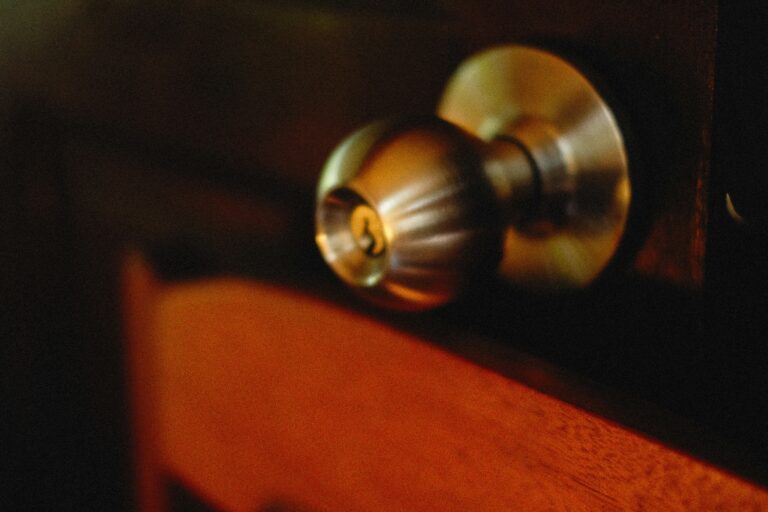
It had been thirty-two days since Elle had left her new apartment when someone knocked on the door. Elle was not in the habit of keeping friends. She had not told a soul about her new address, either. That would have been too much to bear. She hadn’t a single reason to host guests, or to invite in the exacting eyes of lunching ladies; her fine dishware was packed away in storage, and the godforsaken building had nothing worth exhibiting, not one impressive architectural feature to speak of.
You should know that this had not been the plan for the month. She never wanted to move in the first place—in fact, the boxes remained shut, and her mattress lay bare, strewn in the middle of the living room. The fridge remained empty, save for half a bottle of Gatorade. The floor was littered with the brown, papery remains of weeks of delivery.
There was nothing especially wrong with the apartment, she supposed—it was four plain walls, a plain kitchen and bathroom, in a plain building—but she hadn’t wanted to move here in the first place. She had left a well-furnished home a tasteful distance from the city with finishes that she, herself, had hand-selected. Vintage bronze knobs, you know. Those had cost a fortune. La Cornue appliances, too. No, the decision to leave was made quite against her will.
She didn’t even have an exceptionally dramatic tale to hold on to about her marriage’s undoing. She would kill for some sympathy. He didn’t even give her the gift of a good tragedy. In the first days of her self-imposed cloistering, she would imagine elaborate alternative scenarios that would be much more tantalizing to tell, that she could shill to whoever would listen when she re-emerged. Like: she comes home early from her errands and opens the bedroom door to Tom and—and—oh, isn’t it always the housekeeper?—doing unspeakable things on the 500-thread-count linens. Or, he calls her one day from his office to declare that his receptionist was, in fact, worthy of all the years of suspicion. No, her present circumstances were not nearly catastrophic enough to attract the tearful listeners she deserved.
Tom had simply told her, in no uncertain terms, that he would like to try a separation, and would that be all right with her? Something about a lack of depth, or maybe he had said a disconnect? Over leftover pork chops on a Wednesday evening. Of course, it would not be all right with her, she told him, but to no avail; he had already packed a duffel and had a short-term rental booked for two weeks with the possibility to extend. No hurry, he had said. As long as you need to come to terms. We will deal with the house after that.
He had looked at her for a while afterwards, seemingly waiting for something. Elle was a bit stunned; who would get the wedding china? she had asked. What would his friends think of all this, had he considered that? He had just smiled, sort of to himself. There was no hostility. No excitement whatsoever, after eleven years of marriage. Tom was never exciting, though. This was not, on its face, a problem. Indeed, Elle had found herself attracted, initially, to his equanimity. He wore blue jeans and his nails were always clipped. He had a sensible job—a handsomely paid mid-manager at a medium-large bank—and sensible interests like playing golf and watching hockey. He was always tickled by Elle’s eccentricities, which were not eccentric at all, but in comparison to Tom, she supposed that they could be perceived as such.
He was very beautiful. Yes, they were very beautiful together. People would often say that to her. Strangers, even, would see them walking with their coffees, and would come up to say it. Elle could remember every time that had happened.
They hadn’t been talking so much in the last little while, but that had been all right. They would discuss the week’s meals, the weather, which of his friends was getting a divorce, and Elle found comfort in the repetition and predictability of these conversations. Yes, lasagna sounded good for dinner tonight. No, she didn’t know it was going to rain today. Years ago, she had thought of conceiving, but when he was not interested, she’d dropped the subject entirely. She smiled at his friends and slotted herself handily into his life, cooking for boys’ nights and laughing when necessary. She found that she quite enjoyed the predictability of men. She had been allowed the luxury of an unexamined life, in their company; women used too much eye contact, asked too many questions. They were never satisfied with what Elle told them; they wanted to know how she was really, how she actually felt.
But, never mind. All that was in the past now. She rubbed her nose and flitted her eyes across the dull expanse of her living room wall. She hadn’t heard the click of the neighbouring front door yet today, to indicate anyone coming or going. The girls must be at home, but where? Were they still sleeping? It had been too long.
Elle’s face was pressed to one of the blank, grey walls. She scratched her head through oily thickets of unbrushed hair. Once bright blonde, her hair was now marked with the sharp grey-brown demarcation of undyed roots, and had matted into a single tuft on the left side of her head from pressing her face upon the wall and rubbing it along: back and forth, back and forth. A dull and greasy pathway had emerged in a thick line from this daily ceremony. The plaster remained cool on her cheek, even after hours of pressing. Hours of listening. This was the shared wall. Wide-eyed, she searched for sounds of life. Her tongue hurried along the backs of her front lower teeth, flicking back and forth along dull patches of plaque. A lattice of saliva hung onto Elle’s chin, little gravity-drawn pathways hanging heavily and then dripping like molasses from her face to the floor. Fresh rivulets crawled from the corners of her mouth.
***
It had started naturally: she tipped the movers, they shut the door behind them, and she turned to stare at the wreckage of her life. She smoothed her skirt. The silence was absurd; she stood dumbly in it for a while, and then tried crying a bit. It felt appropriate for the occasion, and she did think that she had something worth crying about. She wanted her bedframe, and the nice house, and to win. She was losing, it seemed. A failed marriage is certainly losing.
And then she heard them. Through the left wall, the one with the phantom markings of once-hung frames, came the low rumbling of voices. They were muffled, but they sounded like girls. The walls must be thin, she thought. Shoddy new development construction. She continued staring at the new surroundings, trying to envision her big carpets and dressers and her sectional sofa fitting into less than six hundred square feet. She thought it was sort of funny, like a cruel joke, that her things were so oversized for the place, yet she felt so small in it.
Oh, but they were so loud! It simply could not be ignored. Did they not know they had neighbours?
Elle tried envisioning decorations, channelled her mental energy desperately toward interior design, but, by god, the noise could not be overcome. She felt it was getting louder. What could they possibly need to discuss at this volume? She marched over to the wall. What were they saying? She couldn’t make it out. She stuck her ear to the plaster. She could approximate what they said, filling in the holes herself, but it was so muffled, in the abstract.
And then came a bright, piercing peal of laughter. It was somehow clear, as though the laughter was right there in the room. And then she heard another, this one more staccato, a sharp cackle joining the undulating music of the first. It really was music, too. True, simple music, and it was a melody that Elle had not heard in a long, long time.
Inexplicably, a lump swelled in her throat.
***
From then on, Elle was transfixed. The almost-comprehensibility was intoxicating. These warm, feminine tones, layering and swelling and quieting and laughing—laughing—invited her into conversation. She moulded the warm, shapeless notes into words. She would think of what she would say back and construct whole conversations that she had never had, and find that she had much to say. She would wait, impatiently, for laughter. She could laugh and cry and sing along to their songs and confess, in perfect anonymity. The laughter especially sent her into paroxysms of ecstasy. She had to join, and when she started, she could hardly stop. Her face was perpetually wet, strings of hair sticking to the sweat and tears and saliva that would drip and smear onto her cheeks.
As each day faded into the next, she told them about every episode of her whole life. She told them about how on that road trip to the coast, she had gotten some kind of terrible stomach bug. Tom and everyone went to dinner, and she hung back in the hotel, tucked into the beige bedspread with the bathroom garbage bin beside her. She flipped around and found a documentary on some channel about this polygamous cult in middle America, living secretly in the middle of a forest.
Elle had kept drifting off, but the parts about the sister wives held her attention. The women were truly ridiculous—imagine organizing your life around a man, she thought. The documentary interviewed six women married to the same husband. They were mostly gripped by jealousy, over time allocation, kids, and the pecking order. Only two of the wives seemed to exclude themselves from the internal politics. The filmmakers recorded them hemming dresses together, cooking dinners, wiping jam off each other’s children’s faces. They would often launch disapproving glances at the camera, which had been sort of arresting. They were looking right at Elle, as if to say, Shoo! You’re not wanted here. The documentary had ended on a grainy image of the pair as the camera jostled down the dirt road and through the trees, returning the cult to obscurity. They sat next to each other on two of the rocking chairs lining the porch, both leaning forward, whispering into each other’s ears in matching bonnets, distinguishable only by one’s coke bottle glasses, both bursting into raucous laughter until the camera drove too far away and the screen faded to credits. She had thought they were stupid, then. She thought maybe now she understood.
After some days of trial and error, she had found the thinnest point in the wall, or perhaps it was just where the girls were most of the time—a dinner table? the couch?—and situated herself there, crouching, flush to the thin boundary. Whenever they left, she would hear the clunk and click of a closed and locked door from the hallway. She was being abandoned, she thought, digging her fingernails into the wall until the paint caked underneath them, but at least she knew it right then. On the contrary, when they fell quiet in the night, it was always more upsetting. When they went off to bed, there would be a period when she wasn’t sure if they were still awake. She would wait and wait for a voice, hunched and scuttling back and forth along the wall searching for one, but it would not come. She would be alone again until the morning. When all hope was lost for the evening, she would crawl to the bathroom in the dark, releasing a hot, unending stream of urine. She would order whatever food appeared first on her phone screen. She would stay up, sitting against the wall, rocking on her tailbone and nibbling her cuticles. Her eyes would glaze over, and she would pray for morning.
***
On that thirty-second day, the girls were deliciously loud. Stereo bass thumped, pulsating through the wall, vibrating pleasantly on Elle’s cheek. They woke up so late; Elle was relieved to hear them, but the sun was already setting. Never mind. They were there now.
They were singing, shrieking the unintelligible lyrics, giggling between words. Elle’s breath hitched. She nuzzled closer, widening her fingers and rubbing her palms up and down along the wall. She began singing back, as she always did, but my, they were so loud today, the loudest they’d ever been, she could barely contain herself! She pressed her eyes shut and communed with them, held by the pulsating bass and the soft, dulcet melodies of laughter. Her mouth hung open, thick white strings of spit collecting and dripping as she groaned to the music. She was right there with them—they were one—oh my, to be so understood, to be so loved!
Our bodies are writhing together, she imagined, the beat pulsating like one shared heart, ventricles filling and emptying into each other, wet naked skin upon wet naked skin as we dance, dance. Who is who? I move along with you. There are many bodies, but in the end, only one, tufts of hair and globules of spit and naked breasts pressing against each other, and the music never stops, and we know each other, and we are each other, and the song of our voices forces us like clay, from a spinning orbit, into a single sculpted appendage.
It could no longer be contained. Elle was writhing, wailing, beside herself. She kept crying out and so did not notice when the music stopped, or notice the furtive exchange of words. She did not notice the thud of the door from the hallway. She did, however, hear the knocking.
Well, there were three knocks—rap-rap-rap—she thought, anyway. Three staccato little knocks—right? Neat and tidy. She turned to look at the door, shaken from her euphoria. It was dead quiet now, so quiet that it was almost unbearable, so quiet that she could hear the blood pulsing in her eardrums in place of the bass.
“Um, hello?” a voice, clear as day, rattles through the door.
She does not dare speak. Her precious voices hushed in whispered chatter on the other side of the door, uncharacteristically quiet and tense. As if to turn on her. To keep her out.
“Uh, are you good? Is someone hurt? What’s going on?”
They knock and knock and knock.
Elle stands perfectly still, gripping the wall. Reproach boils up into her face, stinging her cheeks.
These stupid questions.
Go away, she thinks.