
My birth mother died last year, taking two secrets to the grave: the identity of my Black father and why she never wanted to meet me or my daughters. She gave me life, then 52 years of silence.
I wanted to know her. I had tried to reach her long ago through a social worker, and later, once I knew who she was, by letter. She didn’t acknowledge me. She never had a single word for me. I thought that if I knew her, I would know myself. I believed that she held the key to my identity. She could tell me who my father was.
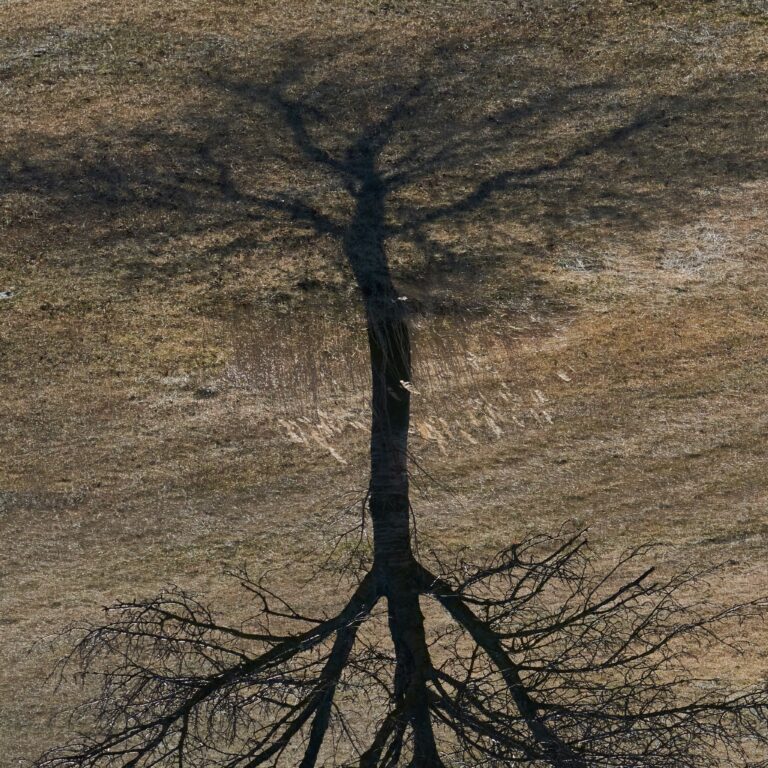
As a Black person adopted into a White family, I was—to quote Marcus Garvey—that “tree without roots.” I had no origin story, only persistent feelings of insecurity and never belonging. If only I knew my Black father, or some member of his family, I would be whole. I would finally be connected to my Black heritage.
I believed I could find him if only I searched hard enough. My study of literature and law taught me to dig for small clues to answer big questions. I was born in the days of closed adoption records, but also of yearbooks and city directories—searchable evidence that helped other adoptees find their birth families. Local Black folks said, “Come to the family reunion, the elders will tell who your family is.” Yet decades of dogged research and reaching out turned up nothing.
When at-home DNA testing came out, I was excited. I thought it would smash my ancestral brick wall and lead me to my Black family, a relationship I had fantasized about since my teen years. I had a recurring dream: a handsome Black man stands on a bluff and speaks to me from a distance. His face is familiar, but I can’t hear his words; they are muffled by rustling leaves and rushing tide. As I reach for him, he disappears behind trees and fades into the ocean. I’m on the cusp of recalling his name when I awake.
While none of my DNA cousins were close enough to identify my father, DNA testing revealed my birth mother had lied about him. He wasn’t a light-skinned or White-appearing Black Nova Scotian. He was African. East African. Kenyan or Ugandan, perhaps Luo from the border region.
An old friend from Uganda, Azzi, was astonished by my newfound ancestry. We met in our early twenties while students at Dalhousie, when I believed I was half Scandinavian, half Black Nova Scotian. I was in first-year law school then; I felt out of place there, as I have almost everywhere throughout my life. Azzi was completing her Master of Public Admin degree and quickly befriended me. I fell in love with her confidence and intelligence. She was worldly and had wide-ranging interests in food, music, politics, and culture. I was in awe of her beauty, her dark brown skin, micro braids, and bold style. She was into bodybuilding then, sculpted and strong. She was not afraid to voice her opinion.
Azzi had always been generous—with food, advice, and experiences. She introduced me to Fela, Masekela, and Makeba. “Just try this,” she’d say, holding up a Cabernet, bitters, rooibos, passionfruit, or some tenderly seasoned beef to counter my vegetarian tendencies. Azzi pushed me to sample new things and to look at events and history from a different perspective. “I’m African,” she’d say to explain her views and tastes. My instinct was to hide and try to blend in; hers was to be noticed and engage with others. She had come from a place where everyone was Black, where Black pride and identity were understood, unselfconscious, or taken for granted. In the absence of Black family, I had cobbled together a Black identity, relying on books, music, and friends. While Black art and friendships helped me learn about and connect with a variety of Black traditions, ignorance of my own Black heritage impeded a feeling of belonging in any of the Black cultures I embraced. I was still an outsider.
Twenty-five years ago, we sat in a bar on Argyle Street, sipping wine, teeth turning red, Azzi explaining bits of her Ganda culture and telling me what it was like growing up in Botswana and Kampala.
“You should come home with me. You really need to see it to understand what it’s like.” It was the kind of thing people say casually, especially after a few drinks, but Azzi meant it.
“I’d love to,” I gushed, not knowing then that I actually would.
After I became a parent and an insomniac, I quit drinking wine and withdrew periodically, overcome by low self-esteem and dysthymia that I linked to the trauma of being adopted. Azzi didn’t press or try to change me, the way she might have done in our twenties. She had her own challenges—having her education and accomplishments fully recognized in some job markets. Her path to permanent residency and citizenship was an arduous one. After decades of career changes, moves, and personal struggles, we found a deeper understanding of each other.
In the summer of 2023, I travelled with Azzi to visit her mother in Kampala. Like many in the African diaspora, I had a sincere but vague idea of seeing “the motherland” or, in my case, fatherland. For Azzi, it was a trip back home. For me, it felt like a spiritual and educational quest to a place imprinted on my body but not in my consciousness.
After a long journey from Nova Scotia via Toronto and Dubai, Azzi’s mother, Freda, met us at the airport in Entebbe. She exclaimed joyfully at the sight of us and squeezed Azzi in a hug that lifted her off the ground. She embraced me, too. I had met her twice when she visited Azzi in Halifax and Ontario. At her home in Munyonyo, a cake awaited us, “Welcome Girls” written across the top in rose-coloured icing.
***
In Kampala, we accompanied Freda on errands. During a trip to collect unpaid rent from her market stall’s tenant, the three of us sat closely around him in a corner of the small space. “These are my daughters,” Freda announced in English.
The tenant, a young man who ran a metalworks shop out of the stall, looked at Azzi, me, Freda, and then back at me. He noted our differences, but his face betrayed no judgment. “These are my daughters,” Freda announced again.
The tenant acknowledged us with a common greeting—a brief, shallow bow, hands pressed together in prayer—then negotiated at length with Freda in Luganda. In the background, men welded metal parts without hand or eye protection, sparks flying in the dim lighting. Petite and in her late 70s, Freda was formidable. She refused the tenant’s partial cash, insisting she would only take payment when he had the full amount.
The large market area consisted of several open-air stories and, like much of the city, seemed a mix of archaic and modern, pastoral and urban. Old materials fused into new goods, secondhand clothing sold and worn with flair, and cell phones creating new efficiencies for craft and food sellers. Outside, chickens and cows shared the roads with pedestrians, boda bodas, armed police, and military personnel. Everyone moved in semi-organized chaos through crater-sized, pothole-ridden streets. At every intersection, street hawkers, some of them children, carried bundles on their heads, selling loofahs, fruit, and household goods.
Above Kampala’s rolling hills, dust, construction, and emerald green trees, the sun shone every day, painting everything in yellow and bronze. From my room in Freda’s house, I would hear a distant call to prayer before dawn, then a rooster crowing. As we drank Ugandan coffee and ate eggs at the kitchen table, Azzi looked at me with fresh eyes. “I never imagined when I met you that you would be East African. You were African Nova Scotian. I know you are half White, but looking at you now, here, I can see the East African in you.”
My medium reddish-brown skin had deepened in the sun. My hair was cut close to my head, the way many Ugandan girls and women wore theirs. Though I did not fit in, I was not entirely out of place. I stood out more for not speaking Luganda or any other local language. I enjoyed being in the company of Azzi and Freda; I revelled in being a brown face in a sea of dark brown people. There, I was one of millions of Black Africans.
In the evenings, I watched Azzi and Freda together. Freda was strict and loving. Azzi doted on her mother, thinking of every possible thing she could do for her. They had spent years apart since Azzi left for school, but remained close. Azzi carried the same determination and self-confidence as Freda; she would contradict her mother when they disagreed.
Azzi and Freda gave me many experiences that were good for my soul. On the way to Masaka, Freda’s home village, we took pictures at the Equator in Kayabwe. Azzi’s Aunt Nora treated us to the Mulungou fish fry, where we ate deep-fried tilapia with our fingers, followed by a boat ride on Lake Victoria. Freda took us to Jinja, the source of the Nile, and the spiritual Ssezibwa waterfalls, where we saw a tree planted in 1889 by Mwanga, a king of Buganda. I ate the sweetest, juiciest pineapple I had ever tasted. Freda made us a comforting groundnut soup. I drank freshly pressed sugar cane juice. At a roadside fruit stand, Freda carefully selected a heavy jackfruit that Azzi and I cleaned. The delicious, fibrous yellow flesh was worth the labour of removing it from its sticky covering. I rode a boda boda with Azzi to the grocery store. When I had my hair braided, three women worked together in half the time it would have taken back home. With Azzi and Freda, I briefly experienced Ugandan culture and history from within, and it felt wholesome and fulfilling.
During other outings, we visited the Kasubi Tombs—home of the Buganda Kingdom and traditional thatched architecture—and the Uganda Museum, which housed tribal artifacts and natural history. After I told her about my African DNA relatives, including a Ugandan American woman from Tororo, Freda showed me a linguistic map on the Museum wall. “Here.” She pointed to the Jopadhola, a branch of the Luo who live in Eastern Uganda. “These are your people.” I had longed for an authentic connection to my African ancestry, and, finally, I had begun to see and feel it.
In the first days of my visit, I felt homesick and culture-shocked. Soon after, I felt profoundly grateful to Azzi for bringing me with her, and to Freda for hosting me in her home, showing me her city, and gracefully trying to enlighten me during my three-week stay.
As my time in Kampala ended and I returned to Nova Scotia, I had mixed feelings. For the first time, I could see in vivid detail what I had missed knowing—a language, a tribe, a clan, a homeland, a close relationship with a parent. I loved being in Uganda, closer than ever to my roots, standing on ochre soil among people I might be distantly related to. But it was bittersweet. The experience made my loss more poignant.
The following December, Azzi returned to Kampala. Freda’s permanent residency application for Canada, after years of delay, had been approved and was in the final stages of being granted. Soon, she would move to Ontario to live with Azzi and her partner. Azzi and Freda were planning and preparing for the move.
I video-called Azzi and Freda to wish them Merry Christmas. They were dressed in brightly coloured African prints and had been out for dinner. They updated me on home repairs and a visit from Azzi’s brother. “Have you found any new DNA relatives?” Azzi asked.
I told her of a young adopted Ugandan-born woman who had written to me, but who did not reply after I told her I was also adopted.
“Oh well,” they laughed and shook their heads. I shrugged my shoulders in resignation.
I had come to accept I would never know my father. Freda leaned toward the screen. “You are one of us,” she said firmly. I smiled and pressed my palms together at my chest.
One of us.