
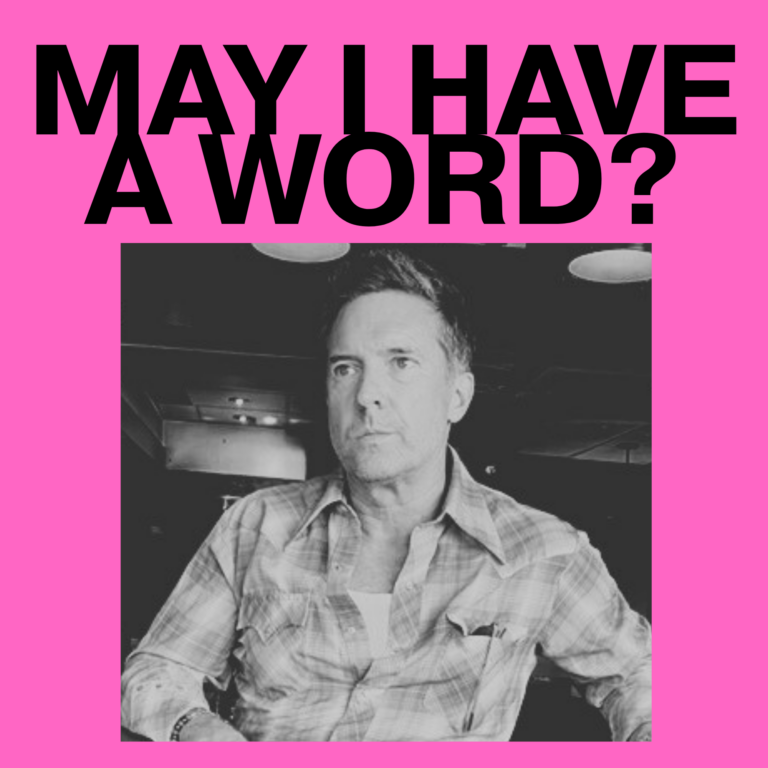
ABIDING PRESENCES
A conversation with poet-scholar Dale Martin Smith, author of the Griffin-nominated Size of Paradise (Knife Fork Book).
February 2026
When does writing feel easiest to you?
I'm not sure writing is ever easy. But I like to write in the mornings. It's a time when my head is clear and my energy is activated.
Who do you share your early drafts with?
I’ve been writing a long time. I used to share drafts with friends in writing groups in San Francisco. Now I share fresh poems with occasional friends in email correspondences. I have one or two friends I share full manuscripts with when I feel they’re ready. I was in a writing group with a few faculty members at TMU before Covid, and I shared work there.
Have you had a teacher that stood out or that you still think about to this day? How does their influence continue to surface in your current practice?
I was fortunate to have several great teachers, especially when I lived in San Francisco. Tom Clark taught me compression and the function of a line in poetry. Joanne Kyger taught me how to live with poetry as an integrated part of everyday reality. She said, “I don’t care what you think or feel, I want to know what’s happening.” And that sticks with me. Gloria Frym taught me how to make magazines, and how to read Walt Whitman and Emily Dickinson. Robert Creeley, Amiri Baraka, Diane di Prima–these were not directly my teachers in a classroom sense, but I learned about the lore and communities of poets through them. Ken Irby through Correspondence, and Gerrit Lansing through conversation–both opened a great sense of the possibility of the poem as an architecture of possibility in me. Duncan McNaughton, a little known poet outside the San Francisco Bay Area, has been an abiding presence in my conception of poetry for more than thirty years. I could go on and on.
When did you first consider yourself a writer?
When I was 18 I knew I wanted to write. I didn’t know I wanted to write poetry. But I was a poet. It was a calling and something I didn’t understand. No one around me encouraged me to be a poet, and I don’t recommend it as a calling.
How has writing enabled you to rewrite yourself?
It opens the possibility of apprehending the experiences and conditions of the everyday. You train yourself to meet the conditions of language as the interface between yourself and the world.
What is magical to you? What is the last thing you were enchanted by?
I like discovering new poetry and being in new places. In December, while I was in Hawaii, I began reading the poets Keith Waldrop and Christopher Middleton. Reading them very closely. And attuning myself to the environments in Kona. And the poems I made there surprised me. It’s hard to describe, but poetry is a magic practice that in language as a medium brings new wonder to myself.
What is something new that you’ve learned recently, whether mundane or existential?
I learned that coqui frogs are loud at night and they are non-indigenous to Hawaii. They are invasive actually.
What was the last risk you took? OR What’s the last mistake you made?
Risks: driving to Niagara in a snowstorm without snow tires. Mistakes: not trusting myself enough. Not following the immediate hit of intuition, and instead looking for some imbalance of reason.
What is a word you love but don’t get to use enough?
Ministrate.
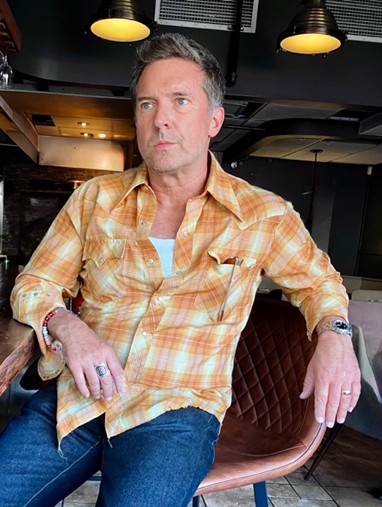
Dale Martin Smith is a poet, editor, literary scholar, and professor at Toronto Metropolitan University. He is the author of the poetry collections The Size of Paradise (knife|fork|book, 2024), a finalist for the 2025 Griffin Poetry Prize; Flying Red Horse (Talonbooks 2021); Slow Poetry in America (Cuneiform Press, 2014); Black Stone (effing press, 2007); and American Rambler (Thorp Springs, 2000). Smith’s scholarly contributions include Poets Beyond the Barricade: Rhetoric, Citizenship, and Dissent after 1960 (University of Alabama Press, 2012) and three edited editions: That Tongue Be Time: Norma Cole and a Continuous Making (University of New Mexico Press, 2025), An Open Map: The Correspondence of Robert Duncan and Charles Olson (University of New Mexico Press, 2017), and Imagining Persons: Robert Duncan’s Lectures on Charles Olson (University of New Mexico Press, 2017). His essays and poetry have appeared in Poetry, The Walrus, Los Angeles Review of Books, Boston Review, and Lana Turner. With Hoa Nguyen, he edited Skanky Possum, a literary zine and book imprint, from 1998 to 2004. A new book, The Passenger, will be published by Waved Books in October.
He’s currently interested in holy wells, stone circles, neolithic dolmen, and Cornish archaeoastronomy.