
To Associate
A word with Toronto’s own Jennifer LoveGrove, author of Tinder Sonnets (Book*hug). November 2026
Who do you share your early drafts with?
No one. Adolescent or later drafts I may share with a trusted non-writer first, someone non-judgemental and openly supportive. It’s easy to be discouraged or over-accumulate feedback at too early a stage. Having said that, I have two close writer friends I share new work with when I’m excited about it.
What was the book that got you hooked onto reading/writing?
I was reading before I started school but I don’t remember the first books I loved. Sesame Street had something to do with my early love of reading, and my mother reading to me. I was writing and telling stories from a young age, but Gordon Korman’s “Bugs Potter” books made being a writer feel possible to me. He published his first when he was just fourteen years old! Then when I was a teenager (pre-internet!), it was discovering Libby Scheier’s poetry collection Second Nature (Coach House Press) in my local public library, where I worked. That book inspired me so much that I stole it.
Is there music that reminds you of, resonates with, or perhaps was inspirational to your most recent work?
My favourite pairing with my recent book The Tinder Sonnets is Betty Davis’ album They Say I’m Different. She was a brilliant and bold American funk singer and songwriter. Her raunchy style and pioneering songs inspire me. But when I’m actually writing, I can only have non-invasive instrumental music on.
What genre do you read the most? What genres do you turn to and why?
I read almost exclusively poetry and literary fiction. It’s how I make sense of the world. These forms expand the possibilities of language and meaning and remind that they’re infinite.
Is there a bar, restaurant, coffee shop, or diner you’ve loved to write in?
When I lived in Parkdale (1997-2006) I used to read, write and edit at a pub called the Rhino. I think it’s still there. I’d sit alone at a table in the window and go through submissions to my zine dig., edit poems, and read. I was friendly with the staff and no one ever bothered me. I felt very comfortable there, and I miss having a quiet local that is walking distance from home, but I am very sensitive to sound, so I rarely work in public these days.
If you had to describe your life/self/writing using perfume notes, what would they be?
Oooh fun question! Something spicy with a subtle undertone of earthiness that verges on the sweetness of decay. Kind of like Autumn Vibes by Maison Margiela. This pertains to both my writing and my life.
Is there a book that really surprised you? Why?
Definitely the Romanian novel Solenoid by Mircea Cartarescu (translated by Sean Cotter). Surprising because while relatively plotless, and shamelessly long (over 600 pages), it is absolutely riveting. It’s so weird. The narrative voice is addictive, and just when you think it’s going nowhere, something stunningly surreal and distressingly beautiful and unexpected happens. I love books that surprise me but they are rare.
What are some things that you collect?
I’d day old books and magazines for collage-making, but that’s more hoarding than collecting. I start to collect things but then I lose interest and give them away (vintage brooches, for example). I am actively trying to consume and amass less, overall. But I started to collect antique Underwood typewriters, not to use, just to look at, and only if I find them randomly at a yard sale or they’re a gift. I don’t really seek them out. I have two so far and they’re beautiful. Maybe two doesn’t really constitute a collection.
Is there a writing cliché you secretly love?
Write what you know. It’s not always the best advice, but it does remind me that my decades of a weird life are valid and worthy of being written about.
What is magical to you? What is the last thing you were enchanted by?
Learning to play the drums. Limb interdependence still feels like magic to me.
How does place or emplacement structure your work?
I don’t know if place impacts the structure of my work, but it does unconsciously inform my imagery. I only really notice that impact afterward, not during the writing process. But I’ve always lived in both very urban and very rural and small town places. I grew up in a small town, which I found very uncomfortable and oppressive and I felt much more at home when I moved to Toronto as a teen. But as an adult, I’ve structured my life in such a way that I spend part of my time on a thirteen acre rural retreat with a stream and wild turkeys and haskap shrubs, then return to a very urban life of subways and concerts and people from everywhere in Toronto, and both lives permeate my work.
What is your favourite pen? Please tell us about the life and times of this pen.
For some reason, my favourite pen is any free pen from a hotel or event. They’re nothing special, usually just blue ballpoint pens, but they always write the most smoothly, reliably, comfortably and without annoying blotchiness. If I’m in a hotel room and there’s a pen, it’s mine. I am legitimately excited by free pens and I rarely ever lose them.
What is a word you love but don’t get to use enough?
Sometimes I get a single word stuck in my head like a song. Lately it’s been the verb “associate.”
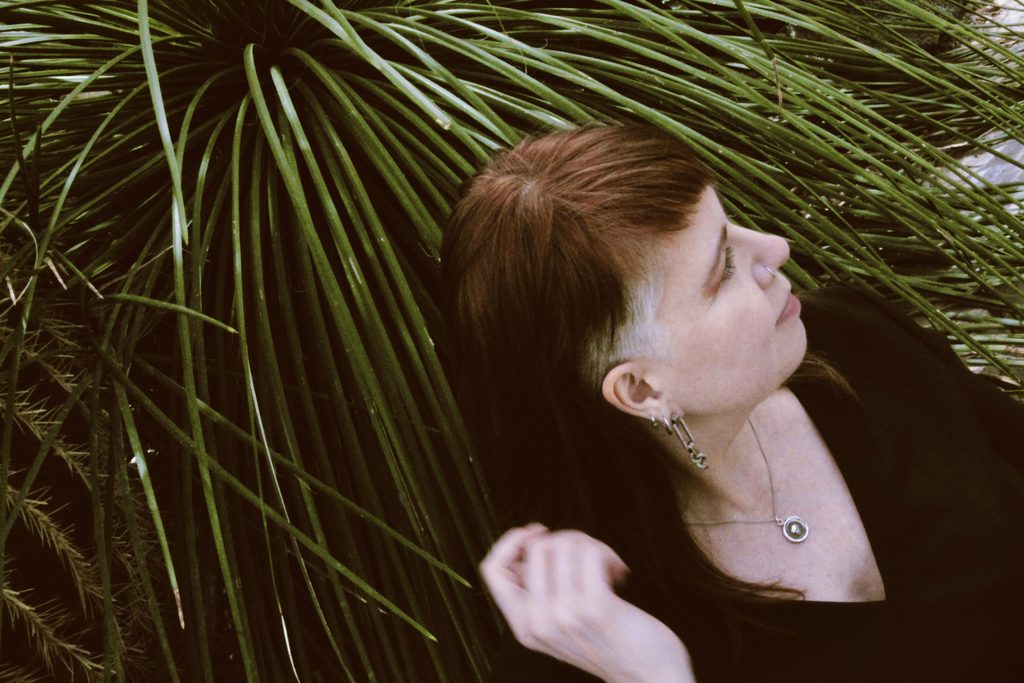
Jennifer LoveGrove is a writer, editor and collage artist. Her latest book is the critically-acclaimed poetry collection The Tinder Sonnets (Book*hug, 2026). She is the author of the Giller Prize-longlisted novel Watch How We Walk, as well as three poetry collections: Beautiful Children with Pet Foxes (longlisted for the Raymond Souster Award), I Should Never Have Fired the Sentinel, and The Dagger Between Her Teeth. Her collage art has recently been shown at Northern Contemporary Gallery and published in Herizons Magazine. She divides her time between downtown Toronto and Squirrel Creek Retreat in rural Ontario.
She is learning to play the drums again, after some tendonitis and strength training.