to The Beaches in a murphy-bed-duplex
on Queen Street where he often sat,
Buster Keaton deadpan, eyes drifting
through windows, hands holding large
gnarled thumbs in humble silence.

After a quiet visit, I’d walk two blocks
to the great lake, collect thoughts
and smooth shards of beach glass,
skip wave-worn stones through mist
and gaze into the vast, wide grey.

Decades later I discovered Uncle Elmer
stood up against the machine. Fought
the power during World War One
as an unpopular yet respected
conscientious objector.

Instead of carrying a rifle, or go to jail,
or settle for a soft, desk job at home,
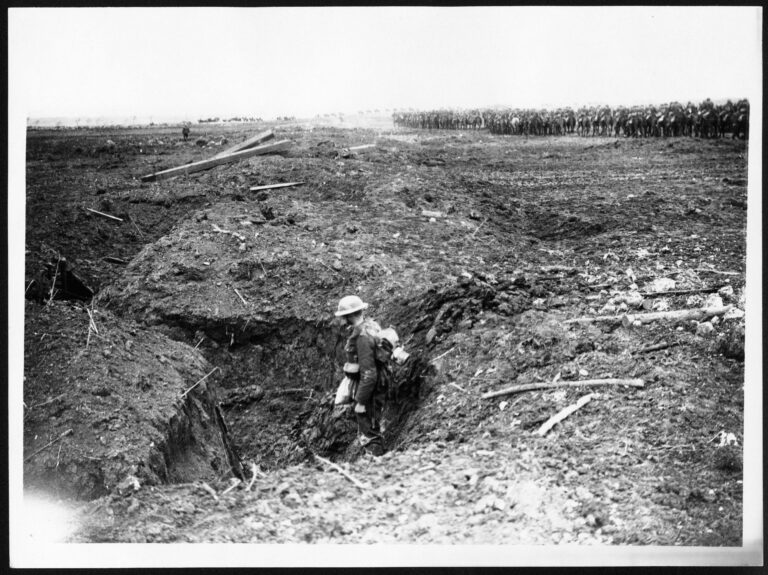
the Canadian Army shipped him to France
and plunked him in a frontline-trench
for five of his best years.

A decree made clear by the fog of war,
branded with a red cross on arms and chest
they ordered him into No Man’s Land
to find and retrieve a last gasping
or freshly fallen compatriot.

Uncle Elmer never spoke of war,
but marched each Veteran’s Day Parade
until age 85. When he finally scaled
life’s trench at 92, doctors wrote:
Cause of death: gas poisoning