
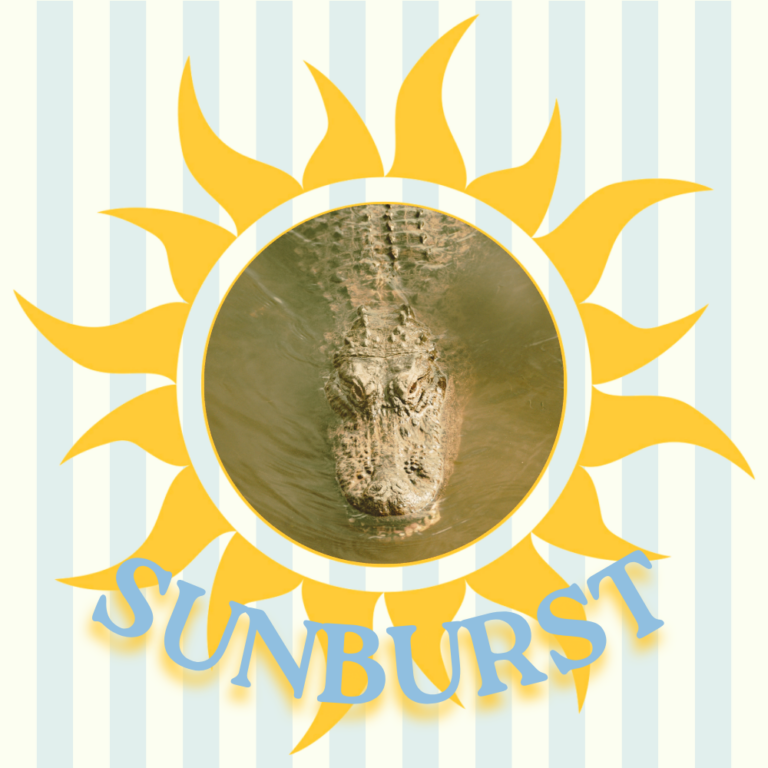
Gatorland surprised me. I only knew reptiles as documentary villains, where I rooted against their scheming in favor of furry pacificists, but standing on a swamp’s suspension bridge sucked me in. Only bubbles hinted that shadows were anything other than logs shifted by current. Gators glided soundlessly, propelled by whipsaw tails that could send them rocketing five feet above the surface. When staff dangled raw chicken, the scene erupted: lashing tails, grasping claws, gnashing teeth. They seemed alien, all ridged backs, armored scales, and yellow eyes. Their status as apex predator untouched by evolution appealed. They were everything I wasn’t but wanted to be: unconcerned, unafraid, unyielding. Perfectly adapted to their environment. Pure function driving form. No need to please, to appear cute, sleek, graceful, or polite. Even females grabbed what they wanted and ate with voracious appetite—a stark contrast to the eating disorder that ruled my life. And they had no natural predators. They ate, slept, sunbathed, and mated unmolested, resorting to force only when necessary and then to lethal effect. I wanted to distill and imbibe their essence.
I watched until the sun wilted me. It seemed to boil my blood, cooking me from the inside—heat intolerance being a side effect of antidepressants prescribed for my eating disorder. Or was it hypoglycemia? I hadn’t eaten enough at breakfast. Sweat stippled my t-shirt. My head swam. I imagined leaping the rope, parting the fuggy water and feeling it close over my head, where it sucked heat from beneath my ballcap.
“Are you OK?” asked my husband of five days. “You’re white as a sheet.” He laid a hand on my forearm. “You feel really hot. Let’s get some air.”
Maybe, I thought, looking back as the bridge swayed beneath us, I can be cold-blooded, too.