
I remember Dad picking my sister and me up from school one Wednesday afternoon and stopping for gas on the way home. There was an unhoused man that stayed around the gas station near school and Dad would sometimes bring him socks and underwear. He kept honey buns in his glove compartment to hand out to panhandlers.
“If you give them money,” he’d say, “they’ll use it for drugs.”
I remember he went into the gas station while my sister filled up the car and minutes later he strolled out with two scratch-off lottery tickets–one for each of his girls. Ecstatic about my prospects, I leaned over the console of his old Cadillac to dig a penny out of the grimy cup holders and sat down in the backseat, pushing the door open and swinging my legs around to face the fresh air, tiny Mary Janes dangling as scratch-off shavings littered the skirt of my plaid uniform. I didn’t win anything that day.
Since I stopped speaking to my father three years ago, the cosmic bond we maintain is illuminated every time I stop for gas, and though I’ve never bought a lottery ticket myself, I find myself considering my odds each time I fill up my car.
Most of what I remember of Dad from before the divorce is what was visible from a toddler’s eyeline: the frayed hems of his blue jeans, spots of bleach from a haphazard laundry day, Adidas Superstars larger than my whole entire head.
My parents separated in 2004 when I was three years old. I’ve always known them to be separated and as such the divorce caused me very little grief. My sister was ten years old at the time and had a different perspective because she remembered the before: the downstairs fights and sit-down talks about how things were going to change, lies sprinkled in about Mom and Dad still loving each other, that we would remain a normal family.
Mom got full custody in the divorce. Dad didn’t take her to court over it. She allowed him visitation on Wednesday evenings and every other weekend. Wednesdays became my favourite day of the week—Dad was fun and Mom had a stick so deep up her ass it would need to be surgically removed. After they had lived in their separate apartments for a few months, Mom allowed Dad to keep my sister and me overnight on days he had visitation.
One night at his apartment, I got sick. I peeped into his room to wake him up, listening for a second to his deep, rolling snores, before crawling into his bed next to him, knees hugged into my chest, moaning complaints of nausea and feverishness. I lay there and vomited onto the pillow beside him. I think now about the frailness of a child not even five years old, too sick to raise her head and throw up on the floor.
“That’s okay,” Dad said. He sat up and gave me his pillow, taking the puke-soaked one and flipping it over to lay back down on the clean side. He didn’t put a hand to my forehead or really even open his eyes. He was snoring again within seconds. I remember thinking then that I was so lucky to have such a selfless father.
When I was five, Dad remarried. He met a woman named Linda and moved in with her before my sister and I even knew she existed. Such a dramatic change to our lives excited me and terrorized my sister. Wednesdays-and-every-other-weekend now included Linda’s condo, her two little poodles, Beau and Rufus, and her collection of porcelain rabbits. She was ten years my father’s senior. My sister wasn’t thrilled about the new marriage and regarded Linda as an evil stepmother akin to Cinderella’s. To me, this was unfounded—Linda was pleasant and kind to us both. Linda and I became great friends. In the same way I was a sponge to all my father’s interests, I absorbed Linda’s love for The Beatles and Johnny Depp films, along with her deep well of knowledge about English literature. In the sixth grade, our class read The Hobbit, but I already knew it well because Linda had read it aloud to me over the course of many Wednesday evenings throughout the time I was in elementary school. In car rides without Linda, who was agoraphobic and rarely went out with us, I would hear my sister complaining about her to Dad. My sister often called Linda ‘crazy’ for her eccentricity; Dad never seemed to disagree with this or defend her from my sister’s attacks. It wasn’t until I was much older that I learned about Linda’s bipolar disorder–the same diagnosis that I would come to receive in my freshman year of college. As a little girl, I liked Linda because I always felt we were the same sort of crazy, and I suppose we were.
One evening at Linda’s condo, Beau had to be rushed to the emergency vet after eating what was essentially a dish of doggy cyanide that Dad had left out. He had been eating chocolate and raisins, but forgot to put away the open bowl. It was one of the first arguments I remember them having.
“Scott, they had to pump his stomach,” she said. “He could’ve died. You can’t leave candy out on the coffee table. You had to know it would make them sick.”
“Maybe,” he said, “you need to learn to keep your damn dogs in the bedroom.”
As my sister and I got older, it became harder for Dad to entertain us the six nights a month we stayed with him. In the summers especially, when there was no homework to be done, we spent a lot of time roaming around Charlotte, searching for things to do. We settled into a routine over time, consisting of dinner at a restaurant and a visit to one of the stores we’d come to frequent. When those options were exhausted, we’d ride around aimlessly in his car while he recounted aloud the plot of whatever movie he’d TiVo’d last week, a CD spinning in the car’s stereo, usually the Beastie Boys’ album “Licensed to Ill.” He would tell us about The Big Lebowski, making sure we knew what a White Russian was, and the Beastie Boys would sing Girls! All I really want is girls!
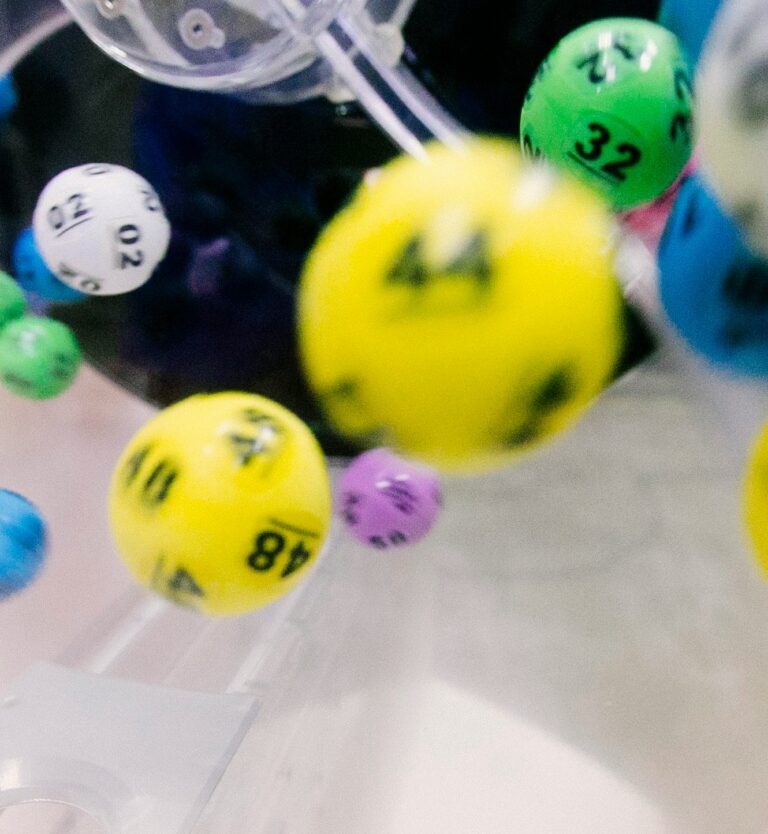
By the end of the night, we would always have stopped at a gas station to get a few Powerball tickets and some scratch-offs. Dad also played Mega Millions, and he told me that since fewer people played it because the prize was smaller, he had a better chance of winning it than the other massive jackpots. The discussion of what he would do if he won the lottery–if we won the lottery, when we won the lottery, he would say–became a regular thing.
I remember going to a lot of open houses with Dad when I was young. He told me he was friends with this one nice realtor lady, so we would go to all of her open houses and think about which house we’d want to live in when we were flush with cash from numbers that had been randomly arranged in our favour. My sister and I would pick out our hypothetical bedrooms while Dad talked to the realtor downstairs.
For years, over and over, he’d ask us the same question you’d ask your friends drunkenly upon finally slumping down after a night out: “If you won the lottery, what’s the first thing you’d buy?”
My answer was always a German Shepherd. Dad said we’d have so much money we’d need a big, scary dog to protect us. For years we spent Wednesday evenings researching K-9 training, watching videos of police dogs, and I would point out how cute they were, while Dad would point out how vicious they could be.
—
Raised Catholic, my father converted to Tibetan Buddhism after he and my mom split. As a natural product of hearing Dad talk about himself and his own interests every week, I learned lots about Buddhism. His Holiness The 14th Dalai Lama became the figure I would do projects on in social studies classes. Dad and I would watch videos of him speaking, or Dad would read me passages from books authored by prominent Buddhists. He had a yellow shirt that said “Free Tibet” and wore it until it became old and ratty. At some point he changed his license plate to a vanity plate that read “FREETIBT.” Mala beads hung from his rearview mirror, and Linda’s balcony was lined with Tibetan prayer flags for the condominium residents to see. He became vegetarian and never failed to let every waitress know before asking them for their meatless recommendations. The image of the burning monk Thích Quảng Đức, the same one used as the cover of Rage Against the Machine’s self-titled album, was his laptop wallpaper for years.
The Gautama Buddha said the true evil was not material wealth and power, but one’s obsession with the idea that acquiring wealth and power would bring them the contentment we all search for. My father existed as a man who placed his future in the hands of the North Carolina Education Lottery while attempting to convince those around him that he was well on his way to enlightenment. The cognitive dissonance required to keep up this conflict of beliefs was not apparent to me as a young girl. I kept getting CDs and books and dinners on Wednesdays, he kept missing child support, but I looked up to him so much that it could never have occurred to me that he might not be the selfless man he had coached me into believing he was. Gifts are my love language to this day; materialistic tokens were the only way I could seem to grasp his affection in any tangible way.
By the time I was in the fifth grade, my sister was in her senior year of high school. Her time left with us before she went to school ticked away quickly that year. Throughout my time in elementary school, the three of us had established our regular haunts around town. Mom was hard on us and had to develop a thick skin to function as the parent who actually disciplined us, paid all of our bills, and made sure we were doing well in school. Naturally, I resented her for being the less fun parent, and though I spent almost all of my childhood with her, in her home, being loved by her, Wednesdays were incredibly special to me, and are undoubtedly some of the most concrete memories I have of my childhood.
Dad, my sister, and I often visited a shop in NoDa, Charlotte’s artsiest neighborhood and one of the few at the time that had remained mostly untouched by the city’s rampant gentrification. The store was filled with art and tchotchkes from around the world—Día de los Muertos skeletons, jewelry with evil eye beads, and clothing made from ethically-sourced wool. We visited the store so frequently that we got to know the owner, Tara, rather well. Dad would normally buy us a small item each and we’d stand at the register for half an hour chatting with her.
Tara would always start with a long, maybe cautious heyyyy when she saw us, smiling at my sister and me before looking up at our dad with wide eyes. “Scott, how’s it going?” she’d say to him, changing the subject before he could answer, opting instead to ask us about school, how my sister’s choir was going, if I was still working on this year’s science fair experiment.
As I grew up I felt more and more uncomfortable going to see Tara. I could never really pinpoint why, but I felt like we were bothering her. Maybe she even thought we were a bit weird for coming to her shop so much. Over the course of several cash register chats, Dad and I found out that Tara had a boyfriend, and that she biked to work every day instead of driving. In fact, she didn’t even own a car—she said it was bad for the environment and she’d like to do her part. I remember Dad asking how far the bike ride was, and then asking her where she lived. Tara’s boyfriend was an artist, and she sold his work in her shop. Dad and I would pick out which painting of his we’d like to have in our mansion when the Powerball numbers finally went our way.
Tara dedicated one wall of her store to honoring the dead. People could come and put up artifacts, notes, and pictures of lost loved ones—maybe even leave a piece of their favourite candy or the memorial pamphlet that was given out at their funeral. It was beautiful. I often spent long amounts of time looking at the various members of the collage, wondering who they were and who loved them enough to leave a memento at this altar.
When Adam Yauch, better known as “MCA” of the Beastie Boys, died in 2012, Dad seemed to take it to heart. Dad had always admired the group, feeling some sort of New Yorker brotherhood with them, though he was from Buffalo and had never been to the city. Adam Yauch became a Buddhist after attending a speech by the Dalai Lama, where he met his wife, a Tibetan-American woman. This cinched the parasocial kinship Dad felt for Yauch. He printed off images of Yauch and his daughter, along with a quote of Yauch’s, and we taped them to the wall of the dead in reverence.
—
My sister graduated high school in 2013 and moved to South Carolina for college. Dad and I kept up our old routine without her, and he and I grew closer. It seemed he wanted to spend as much time away from Linda as possible, so we’d be out late, discovering new stores and visiting new restaurants to become regulars at. We still made it out to Tara’s store every few weeks.
When it was just the two of us, Dad seemed to consider me a trustworthy confidante. I listened to him complain about my mom and her endless demands for money, how my sister refused to answer his calls now that she was away at school, and how Linda was such a nag. I felt honored to be allowed into what I understood as his innermost thoughts. He hadn’t shared with me in this way when my sister was around, so I felt keenly aware of this shift and attributed it to some ubiquity in the relationship he and I had. I looked up to him as someone endowed with a generous amount of charisma and cool, marked especially by the fact that he had the luxury of never having to participate in the less fun parts of parenting.
When I reflected his own behaviors and opinions, I was praised for good behavior. If I complained about Mom along with him, I’d be rewarded. He’d buy me a DVD at the video store or let me get dessert at dinner. If I defended Mom, his lips would purse and he’d not look at me. We’d spend the rest of the night in silence with only mhmms and uh-huhs as responses to what I had to say. I learned that if I behaved like Dad, agreed with him, liked and disliked the same things he did, Wednesday nights would be fun. I can’t think of an eleven-year-old who wouldn’t bend like I did to keep their parent’s fleeting affection. I became like him, his “mini-me,” and I understood that the two of us shared a deep twinship.
While we were out one day at The Penguin, one of our favourite Charlotte restaurants, we saw a poster on the wall advertising the local roller derby team’s first game of the season. They played on Saturday nights, and so every other weekend, my father and I would attend their games, sitting in the stands of a dingy high school basketball arena transformed into a roller rink. I fell in love with the sport. As you entered the building, volunteers handed out program fliers with the pictures and names of all the women on the team When the bout began, all the Charlotte hipsters in the crowd would shout and jeer, beer from their cans of Pabst Blue Ribbon sloshing onto the seats. The rink was set up similarly to the oval tracks cross-country runners use, but the floor was wooden and angled toward the center at a 45-degree incline. The tilt allowed the players to garner speed. The women would zip around the rink, using all their might to slam their shoulders into one of their opponents, sending them toppling toward the floor or the railings that lined the rink. Fists and blows to the face were strictly forbidden.
I learned all of the rules and begged my dad for a purple t-shirt with the team’s logo on it. After each game, both teams would gather on the floor of the rink where fans and friends congratulated the winners and commended the losers. It became tradition for me to try to get as many signatures from Charlotte’s players on the back of my purple t-shirt at the end of every bout.
Dad and I talked at length about me becoming a roller girl when I was old enough, but my lack of coordination and balance made roller skating an impossible feat for me. I’d been skipping every field trip to the roller rink since the first grade. Still, we tried to come up with my very own roller girl name—all the players had clever names to the tune of Ringo Scar, Bikini Killer, or One Hit Wonder. My dad proposed the name Ring’er Bella, a play on the phrase “ring her bell.” The next week, he got iron-on letters from the craft store, and my signed t-shirt became an honorary team jersey.
There was one roller girl Dad and I gravitated toward the most, and I can’t remember if our admiration originated in him or me. She was one of the team’s Jammers, who are arguably the quarterbacks of roller derby. Their job is to lap the herd of defensive players. The Jammer scores a point for each lap they get on their opponent counterpart. The Charlotte Jammer had signed my t-shirt so many times that anywhere you looked, you could find her name, Lyd Vicious, etched there. I looked forward to talking to her after every game. Dad would always talk about her lip piercing on the drive home.
Over a span of several months, he began to talk more and more about Lyd. We had an agreement not to speak of her to my mom or Linda. I don’t remember the details of the agreement, or whether it was a spoken or unspoken one, but I abided by it religiously. That was the way a lot of our relationship seemed to go.
“Other people wouldn’t get it,” he’d say. “Your mom would make it into something it’s not.”
Dad learned that Lyd had a boyfriend, what her favourite restaurant was, the religion she practiced, what she did for a living, and where her place of business was. She worked at the local library and I tore through books like a wildfire, so on Wednesdays, Dad and I often found ourselves spending hours at her library branch. I would scour the shelves for the next book in whatever series I was reading, and he would stand at the counter chatting with Lyd.
When he picked me up from school one afternoon, Dad said he had a very special surprise for me. Lyd had posted on Facebook about wanting a specific vintage set of yellow luggage, and he’d purchased the exact set on eBay. The surprise was that I got to be the one to drop the luggage on her front porch. It didn’t occur to me to ask how he got her address.
After I placed it on her doorstep, we drove to the Thai restaurant on East Boulevard. As the host brought us to our table, Dad groaned. He told me he’d left the invoice in the box with the luggage. I couldn’t see why that would be an issue.
“It was supposed to be a surprise for her, a secret,” he said. “She wasn’t supposed to know it was from me.”
How selfless, I thought. How generous and sweet to do somebody such a kind favour. When he dropped me off at my mom’s house the next day, I slipped up on the agreed secrecy and excitedly told Mom about the menorah in the window of my favourite roller girl’s apartment. I heard her arguing with my father later that evening. I couldn’t make out what she could be so mad about.
At the next derby game, Lyd gave me a necklace. It was a chain with a small silver roller skate charm, a purple gem, and a pendant with my derby name stamped into it. It was her way of thanking us, and, I imagine, her way of shaking the strange feeling of a random man who kept showing up at her work dropping off a very specific gift at her front door unannounced.
Similar stories to that of Lyd Vicious unfolded as Dad skipped from obsession to obsession. If it wasn’t Tara, it was the roller girls. If it wasn’t them, it was the lady at the bookstore, or the girl behind the counter at the video store, the woman who played a fairy at the Renaissance Faire, or the waitress at the restaurant with a pool table and darts. I didn’t find it odd when he took me out to lunches and dinners with women who weren’t his wife. I didn’t protest when I first saw him text the words “I love you” to a contact saved as the name of his workplace. I didn’t say a word as I watched him cheat on Linda with someone who I imagined could be any one of the women we’d spent Wednesdays and weekends getting to know. I loved Linda and considered her one of my best friends, but I loved my father more, and our agreement of secrecy usurped what I knew was moral.
—
As I transitioned into adolescence, my relationship with Dad suffered. I found myself trying to use my newly developing voice rather than going along with everything he said and pining toward all his interests as if they were my own. I began speaking up, testing the waters. He noticed the shift and accordingly adjusted how freely he would give affection.
Linda divorced him in 2016 and he quickly began dating the woman he’d cheated on Linda with for years, whose presence I had always protected for his sake. In 2017, he married the woman. He didn’t tell me, but I confronted him after he forgot to take off his new wedding ring before picking me up one Wednesday.
I don’t remember him apologizing. I only remember him asking, “When are you going to get over this?”
He seemed to intentionally come back to conversations in which I’d get upset and he’d punish me for it. Most often, he’d start a political discussion, and then berate me for disagreeing with him. I attempted to work with him: “Let’s not talk about politics together; we can just agree to disagree,” compromising my values and morals to try and salvage our relationship.
He rolled his eyes at this. “Talking about this stuff isn’t political—it’s just a fact of life. Race isn’t political. Gender isn’t political. It’s just how the world is.” He paused a moment before digging his sword in a little deeper. “You’re the one being ignorant for trying to avoid these important conversations.”
Shirley Jackson writes of a man of my father’s caliber in her novel Hangsaman: “All he wants is no one to think they can be the same as he is, or equal to him […]And you watch out—the minute you start getting too big, he’ll be after you, too.” When I began to question him, stand up for myself, and hold my own ground, I got too big, and he decided I’d pay for it.
I watched as he weaponized my own beliefs against me, over and over again. It continued so that every time I would see him, he would find some topic to push my buttons about—complaints about my mother or sister, news about a recent hate crime, or criticism of the discipline I was studying. It felt like he was doing it on purpose. It felt like he enjoyed seeing me angry, like it gave him some sort of power over me. Any signs of sensitivity were an opportunity to exploit whatever emotion I was showing.
I’d had around twelve years of fun with Dad, in which I’d felt that we had a very special bond, unlike anyone else. I didn’t think there was anyone else with whom he could speak so freely, or share so many common interests with. I thought I was the only person who truly understood him. When I began to face consequences for declaring my values and beliefs, I couldn’t reconcile the way he made me hate myself with the way he had once made me feel part of something.
—
I didn’t mean to stop talking to my father. I never planned to end our relationship. Such a thought felt impossible to entertain—after all, he was my dad. The same man who had presumably changed my diapers, who bought me gifts at Tara’s store, who flipped over the puke pillow and gave me his clean one. But one day, in my sophomore year of college, two years of seeing him much less than I had throughout my youth, I failed to respond to his text. I thought I’d get to it in a couple of days, but I never did. After a few weeks, I decided to keep it that way. I’d been in therapy since prepubescence for persistent depression and anxiety, and I’d spent most of that time trying to convince my therapists that Dad’s behavior didn’t affect me, no matter how much my mom tried to tell them it did. I said over and over that my mental health issues had nothing to do with my father. I begged to change the subject.
My sister had stopped speaking to him a year before I did, though I never asked her why. To this day she grows silent and cold when I bring up our father, changing the subject as soon as she can. I know that her experience with him is individual from mine, but I don’t know exactly how it is different. I don’t push her on it. I know it is painful. I have photos of him hidden in a folder that makes me vomit every time I think about opening it.
I heard about my sister’s no-contact status only through Dad, who praised me for being the good daughter—and revealed his obsession with himself by never once considering that she might have gone silent because of something he’d done.
Since going to college and gaining distance from Dad, the possibility that there was something off about our relationship has snuck its way into my head. Mom had kept her lips tight regarding our father throughout my youth. I learned later that she’d been this way because she had decided to allow her daughters to have the chance of a positive relationship with their father. She had hoped that if she could keep him at a distance, he would do less harm and maybe even do some good. She was married to him for eleven years, and though she has revealed a few details of his abusive nature, there are still things she won’t talk about. I know he has done things to her so horrible she refuses to speak them aloud. I know that I will never find out what those horrible things are. I know that it is better for me not to. Still, it is curious how he has made certain that we protect him, even after he has hurt us so many times.
It would take years for me to really understand that Dad was stalking women throughout my childhood. I certainly did not understand that he had used his daughters as a device to make women trust him—to make himself look better, more respectable, less creepy, less predatory. I didn’t realize that for me, Wednesday nights were a time I looked forward to bonding with my father, and for him, a chance to prowl.
A month after he sent the text I never responded to, he sent one more.
Have a great week. And a great month. And a great year.
He never called me or checked in with my mom to see if I was alive. I have to guess that his first assumption was that I’d turned on him just like every other woman in his life. He must have never bothered to question that. My mom believes he’s scared that she’s told us the things he’d done to her. Reaching out would threaten his own self-preservation, which necessitates that he never admits to being wrong.
I am at a point where I feel mad to have spent so much time trying to empathize with him and buy him excuses. I am furious he has never attempted to return the courtesy. I am mad that empathy was a courtesy in the first place. I cannot forgive the way he used his daughters for his own perverted interests. I think about how nuanced his quiet violence was, and how hard it was to explain to any of my friends, and how I wish I could go back to 2004 and sweep my younger self out of his wake. I still find myself trying to give him the benefit of the doubt, to believe that he just made a series of unfortunate mistakes, but I have never heard him say, “I’m sorry.”
In 2023 I returned to Charlotte to visit a friend, having not lived there since 2019. I had expected to feel a sense of homecoming when I got to the Charlotte airport. Dad had remained in the area, though with three years of no contact, I couldn’t be sure of his whereabouts. Instead of the belonging I’d anticipated upon my return, I was filled with fear.
My heart rose into my throat, pounding, choking me. My senses prickled and piqued as if I were a prey animal keenly aware it was being stalked by a nearby predator. I mulled over the fear, held it in my hands and kneaded it like clay, and later recognized it as the fear a victim feels when exposed to their perpetrator. There was no way my father could have known I was in the airport or in the city at all, but that cosmic connection told me he was there, a cheetah peering through the tall grass as I, an antelope, sat frozen, silently praying.
While in the city, I took a trip to Tara’s store. I was glad to see that she had hired other employees and wasn’t working that day, mostly so that I would not have to talk to her, and hopefully not remind her of my father. I toured the shop, smiling at the inventory that had stayed mostly the same after all these years, feeling the soft alpaca-fur teddy bear that my dad had bought me many moons earlier, now stuffed into a box I refuse to get rid of, and the same beaded necklace that my sister had worn all throughout high school.
I walked past the wall of the dead. Adam Yauch’s pictures were still up, an entire decade later, untouched. I remembered being a little girl standing on her tippy-toes to tape up the photos, thinking that my dad was such a thoughtful man. It made me sick.
—
I think of him as I clean the snow off my car. I put on a record and think of the first time he played it for me. I show my partner one of the movies he and I could quote in their entirety and mouth the words to it.
After breaking contact with him, I was consumed by feelings of guilt, certain I had betrayed him. I believed I was punishing him for a crime he didn’t know he committed. My poor father, alone, without his only friend. How could I have left him with nothing? Selfishly robbed him of the only person who could ever possibly understand him?
It would be so much simpler if he had been a purely evil person—if all he had ever been was perverted and cruel. But most of the memories I have of him are lined with love. My personality is crafted with notes of him in every facet. I want to hate him so badly; it would be much easier than coming to terms with the fact that, like anybody else, he is complicated, and that our relationship is, too. On one hand, I am the little girl with the wool pulled over her eyes, doting over her selfish, abusive father. On the other, I am the selfish daughter with the wool pulled over her eyes, trying so hard to hate her selfless, loving father. The middle feels like an impossible place.
The Powerball got up to $2 billion the other day. Every time I pass a billboard on the highway displaying the current winnings, I wonder what he is doing now, if he is still stalking the gas station attendant, if he is still wasting money on tickets he’ll never win, and if he’d still get me that German Shepherd he always promised.