
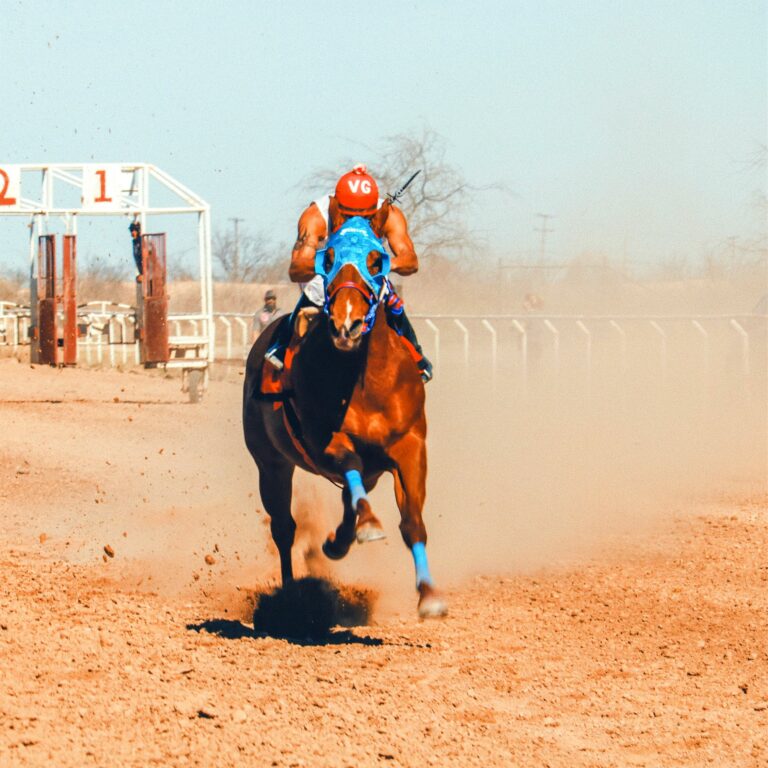
It’s not that I hate the hospital. It’s just the waiting and the blipping of monitors make time and space dissolve. And then there’s too much time to think. And thinking is the last thing I want to do. Or remembering. Presiding over a dying man is a thing you try to forget. The comatose figure, once a giant in my life, now both skeletal and distended. I want to escape, but I am trapped, alongside smells that remind me nature has a dark side.
So, I sit, having taken leave of my life. I was twenty-seven hours in. How many more? God only knows. This is my penance — to sit in this mint green vinyl chair picking at the hole some sad sack before me made. Distraction had been my companion, for a time. I watched several hundred Instagram reels, just scrolling down, down, down. A woman in teal glasses walking on a forest path had convinced me my husband was a narcissist but, when I Googled it, he fell short of the DSM criteria, which was just like him.
Then, I thought about how it was unfair people approaching middle age don’t get a booklet from public health like pre-teens do. The cover would feature an out-of-shape woman standing flat footed in modest underwear under a title like “What to Expect When Your Body Gives Up: A Guide to Perimenopause and Beyond.”
How did I end up here? Not physically here. The answer to that question was easy: my dede, my exceedingly stubborn, impossible even, eighty-eight-year-old grandfather, had refused to admit he had pneumonia. We, my mother and I, aided feebly by my father, had tried to convince him to let the care-home doctor examine him. To which he responded by cursing at us in Russian, something about a bag of dicks was repeated several times. Without modern medicine, the pneumonia held an orgy until it had overrun most of his organs. Before the week was out, he was mostly unconscious with occasional bouts of delirium. Only then were we able to get him to the hospital.
No, it was how had I got to this place in my life that vexed me? Weren’t women supposed to have a renaissance at this stage? Where was mine? I had Livy, my wonderful, amazing daughter who was going through her own metamorphosis into a surly, unimpressed teen. My marriage was okay. Sort of like roommates with benefits, very occasional benefits. I loved my parents, but they still expected me to be a good girl, which meant a doormat. And I had been a doormat. A very good one.
I hadn’t always been. I used to be so plucky, so self-assured — defiant even. I once wore my Anne of Green Gables dress with the blue puffed sleeves to the horse races because I thought they were all like the Royal Ascot. Where had that girl gone? She was so proud to have her very own purse of pink satin in the shape of a rose, a birthday present from her, well, my, parents. Tucked inside was my most treasured possession: a once crisp five-dollar bill from my babushka. She had whispered, “Our little secret,” as she pressed it into my palm. It was the last five dollars she would ever give me. She died two months later.
The only reason that, on that day, my last five dollars was going to be spent at the races was because my dede had finally selected me to accompany him. He usually took Viktor, my older brother. Viktor had been five times. When I protested being passed over, my grandfather would say, “Racetrack is serious place. Is not place for baby games. Maybe when you have mastered yourself, like Viktor, then … you come.” When he took Dmitri, my younger brother, that really stuck in my craw.
Nevertheless, on that day, in my special dress, I was the chosen one, and I was going to have a magical day. I was ready to prove I had mastered myself (whatever that meant). As I stepped into the grounds, I tried to drink it all in, except that the predominant smell was … poop. Poop on a hot breeze. My grandfather, a silo in the crowd, looked like the ringmaster of the world’s saddest circus without my baba to iron his suit and trim his dandelion puff of hair.
Everyone at the track looked sad. No one was in Royal Ascot attire. Not a single lady wore a fascinator perched like a dove about to take flight. There were no men in top hats and tails. Most of the people looked as though they would need to pick up a penny just to make bus fare. Was everyone as cuckoo bananas for this stuff as my grandfather? I thought they needed to get their priorities straight, which were: one, enjoy the pageantry. Two, yell with wild abandon like My Fair Lady. And three, eat popcorn. For the last one, I was entirely beholden to my grandfather’s good will — my five dollars being reserved for an epic bet in Babushka’s honor. My hopes were not high though, about the popcorn, not the bet. There was a reason my grandfather wasn’t called Oleg the Goodwilled. Maybe if I showed him that I was the most serious, he would reward my accomplishment. But it would not be easy. Horseracing, for my grandfather, was more than a pleasant afternoon outdoors. It was an occupation. A vocation. A compunction.
We had arrived hours before the first race, before the June sun had ascended atop the buildings. We had marched straight down to the paddocks to observe the horses. Which ones seemed spirited, even a little mad? Did the color of their saddle pad make the horse prideful or bashful? When a fly landed on a haunch, did the muscle twitch with the speed of a rat trap or a desert cactus? Jockeys also merited consideration. Did they walk like a Bolshevik or a Menshevik? My grandfather with a pincer grip on a gnarled pencil ticked the Bolshevik walkers’ listings.
After what felt like hours of the same old, same old, I did what I swore I wouldn’t do. I got bored. And I wandered. I wandered over to a shady spot along a white stucco wall. I kicked at the grass, my leg swinging like a marionette, until my foot struck something. It was, upon closer inspection, a rock, an exceptionally smooth oval rock. Before me, at least in my imagination, a hopscotch board unfurled. I threw the rock. It stuttered to a stop. I hopped in-out-in-out-in, my patent Mary Janes smooshing the grass. I wobbled on one leg as I reached down to retrieve it when — twack. I bolted upright, my hands dropping to cover my stinging derriere. There stood my grandfather with the rolled racing program, his weapon of choice, coiled at his chest. A hornet’s nest stirred in my gut. I was almost old enough to wear a training bra, and that rat bastard had just spanked me like I was a toddler. I could feel the vein in my temple begin to throb.
“Natalia! How will you make correct selection when you off here doing baby things? Viktor should have come. He knows what is required.”
Stupid Viktor. If he were here, I would punch him for being such a kiss ass.
“No time to correct this. Here,” he said, pressing the folded program into my chest. “You need to pick horse. Better to choose wisely.”
I glared at him for a moment, but he had turned back to watch the warm-up lap. Peeling apart the pages, I studied the gobbledygook of letters and numbers. I really needed to pick a winner, but what did any of this mean? My eyes swept the page, looking for a sign. Come on. Come on. Maybe in the name? Famous Bluegrass. Perpetual Moonlight. Charming Casanova. Left My Heart in Tulsa.
“Well … what is your pick?” He sniffed through his macadamia-nut nose. “Bets will be due soon.”
“Uhhh … I like the lady ponies.” God. I felt my face squinch. What had I just said?
My grandfather looked at me as though I had declared myself the president of the space aliens. “What kind of nonsense thing to say is that. … There no ponies here. Go to petting zoo for ponies. Play with silly sparkle ponies you leave in living room pile.” My grandfather huffed releasing a puff of old tobacco breath. “The stallions have power and speed. That’s where you put money. Eh?” He strode off toward the betting window without looking back. I stood gripping my indignation as he shrank into the crowd. I trotted after him.
He stopped in front of the betting window and submerged his long, wrinkled fingers into his pocket, fishing out his battered leather wallet. I glared up at him before unsnapping my purse and slipping out the precious bill. I stared straight at my grandfather as I slid it through the window to the teller whose bouffant and orange mini dress longed for a different era. I took a breath right down to the bottom of my belly and said, “Stoney Downs, race four. Five dollars to win on the number seven horse, Unicorn Sunshine.”
The teller, looking wholly unimpressed, eyed my grandfather and said, “She can’t place a bet. You have to be eighteen.” She slid the bill back through the slot and raised her hand to hover at the ready. She chomped her gum twice.
The jig was up. There ended my dream. Until. Most unexpectedly, he spoke.
“You want to throw money to wolves? Okay. We will do it.” He slapped his hand on the bill lying in the no-man’s-land of the counter and slid it back. “Make the bet. Like she said.” The moment the ticket poked through the slot, he grabbed it and pressed it into my palm. Then, he brushed me aside, placing a long, very exacting series of bids. “You get that right, eh?” The teller looked up from under her eyelids as she slid the tickets to him, flicking her dark red nails as he looked them over. The line of people rubbernecking like meercats seemed to grow with each heartbeat. He just kept scouring the tickets with the tenacity of an accountant cooking the books. At last, he declared, “Is good,” fanning his hand forward as though tipping his non-existent hat. The teller responded by twitching a single upper lip muscle.
My grandfather strode off toward the stands. I cantered behind, marveling at the grandstands. Nestled between the spires, silhouetted against the heat-faded sky, were the suites that gleamed like an aquarium filled with Ralph Lauren models, sipping signature cocktails in climate-controlled comfort. We, on the other hand, were weaving through the crowd in the cheap seats, my grandfather scanning for a perfect-ish view. Grandfather weaved through the rows, oblivious to the already seated onlookers shrinking in place to let him pass. At last, spreading his arms wide, he said, “This is place where we will see our winners. Well … maybe one of us anyhow.” He winked at me before plunking himself down with his knees splayed.
From high up in the stands, a voice hollered, “Popcorn. Get your popcorn heeeeeeruh.”
My grandfather caught my longing gaze. He gave a small nod, before turning back toward the track. “Better hope you made right bet on princess pony. Or you will miss out.”
I glared back at him. My god how I would rub my win in his face. I would shovel the entire tub of popcorn into my mouth. Every last kernel. The thought made me smile a little. The bugle call — buh buh buh baaaa bup bup bup baaaa baaaa bup bup bup baaaa — abruptly ended my flight of fancy. My attention turned to the men in blue windbreakers at the rump of a horse, heaving it toward its gate; another slamming it shut as soon as it crossed the threshold. Cheers and whistles pinballed around the stands. As the last horse was maneuvered into Gate 12, the crowd hushed. The horses jostled and flicked as everything came to a standstill. I clamped my eyes shut and prayed silently, Baba. Baba. Baba. Pleaaaaase. Let me win. Just this once. Just let me show them. Murmurs were hushed.
Clang. Crack. My shoulders leapt for my ears as the gates burst open. Rocketing out, each jockey lurched forward on their steeds. I felt a cool breeze whip over the tingling hairs on my arms. The ga-lump, ga-lump of hooves transitioned to baaaaa-lump, baaaaa-lump, baaaaa-lump as they clawed up as much ground as possible. The orderly line of horses began to give way as they jostled for position in the inside lane.
“Right out of the gates, Strike It Rich sets the pace with Shotgun Wedding a stride behind,” the commentator echoed overhead. “Hot on his heels is Scheherazade’s Tail, Odyssey, Holy Trinity, and Unicorn Sunshine.”
Watching Unicorn Sunshine with her hot pink number seven emerge from the clump, I felt hope rise. Go. Go. Go.
“In the rear, Perpetual Moonlight moves to the outside. Looking to make up ground as the leaders pull away from the pack.”
I could taste my victory popcorn. I could see myself walking into our house with my stack of money. Maybe they would give it to me in a sack like a bank robber. My family would come groveling to me for money to pay the light bill. And I would tell them, You will never learn responsibility if I just hand you things.
“Scheherazade’s Tail is moving to pass Shotgun Wedding on the inside. … Oh no! Strike It Rich stumbles, Shotgun Wedding takes the lead. Unicorn Sunshine dodges Strike It Rich, attempting to pull ahead of Odyssey as they round the bend.”
The horses’ heads rhythmically bobbing reminded me of paper being pulled through a printer.
“Unicorn Sunshine hitting stride, closing in on Scheherazade’s Tail on the straightaway. Perpetual Moonlight is moving to the outside of Mucho Gracias, looking to make up ground.”
My heart thumped with each hoof beat. I leapt to my feet and started pumping my fists. Go. Go. Go.
“Unicorn Sunshine is boxed in as Holy Trinity turns on the heat.”
Get out of the way, you, you stupid horse. Every cell in my body wanted to pluck Unicorn Sunshine out from between the horses and place her where she could really show her stuff.
“They are entering the final stretch. Scheherazade’s Tail is driving hard for the finish line, looking to finally take the lead from Shotgun Wedding. Hot on their tails, Unicorn Sunshine and Odessey giving all the gas in the tank. The frontrunners just out of reach. In a surprise no one saw coming, odds-on favorite, Strike It Rich, brings up the rear along with Unlikely Hero.”
Please. Please. Please. I crossed both fingers so hard my pointers bowed.
“As they enter the final turn, Scheherazade’s Tail takes the lead from Shot Gun Wedding. Muchos Gracias edges out Unicorn Sunshine. Holy Trinity, showing a good turn of foot, moves into fifth position.”
My body became one with Unicorn Sunshine. I felt an undulation each time she strode toward the finish line. Less than a length stood between her and the lead. She could still do it. One of them could fall. I had seen it happen on TV.
“Muchos Gracias moves into second. He is trying to take the lead from Scheherazade’s Tail on the inside. Unicorn Sunshine overtakes Shot Gun Wedding, who falls to fourth place, trying to hold off Holy Trinity. As they enter the home stretch …”
Come on. Come on. Come on. My breath froze in place.
“It … will be … Scheherazade’s Tail, followed by Unicorn Sunshine with a big move at the finale, Muchos Gracias takes third. What a race folks! This is what it is all about. An incredible finish.”
“Fuck!” I stomped my foot and threw my purse to the ground. Double fuck. My grandfather looked down his nose at me.
“No need for these toilet words.” He shrugged his shoulders and scrunched his face. “Was just race. Was not smart bet you made. If you bet to place, you would have money now.” He sniffed. “It’s how it goes. Horse was okay pick.”
I slunk over to retrieve my purse and slumped onto the bench. To add insult to injury, we had to sit there watching boring race after boring race. I sat parched with my mouth dreaming of a big bucket of buttery popcorn and an icy Coke. We sat. We sat and sat and sat and sat until the sun dipped below the grandstand and swathed us in shadow. When every single, solitary, last race had been run, my grandfather returned to the betting window to gleefully collect his winnings, which were not a lot, but that didn’t stop him from looking like a smug toad as we drove home. I swore to myself that it was the last time I would ever get my hopes up like that again.
Out the hospital window, I could see people trickling out of the building into the daylight, checking their phones or fumbling for car keys. Lucky bastards. It was a good deed I was doing. My mother had sat here, in this same back-punishing chair, for the better part of a week. Holding vigil. Waiting to see which way her father would go — recovery or not. It wasn’t healthy for her, all that time in the dark, not at her age.
I had to cash in on some goodwill to find co-workers who could take my cases. Once that was done, convincing my boss was easy. My husband, on the other hand, needed a peptalk, a detailed list of routines and supplies, and a complete list of contacts before he conceded that he could handle the house and Livy. The harder nut to crack was my mother. I arrived at the hospital with my gym bag packed. “Yulia,” she hated when I called her by her first name, “if you keep sitting on a dilapidated chair in the dark, it will be the last of your days too.” She looked as though I had slapped her. I sighed. “You need to get some rest. Proper rest. In a bed. And you need to eat some real food, not the slurry of who-knows-what they serve here.” I took her hand, rubbing my fingers over her rolling veins, “I will call you if anything changes. He won’t be alone. I promise.”
The light settled into the hollows of her face. She took in a full breath, eyes cast upward, and letting everything go said, “Alright. Just for a little while. It’s not good for you to spend too long here either.”
“We will hope that he rebounds. He’s a tough old goat.” I gave her palm a squeeze. “Now go. I have this.”
She kissed my cheek, gathered her assortment of bags, and with a backward glance, walked out into the bustling hallway.
And so, I waited. And tried not to think. And failed at trying not to think. I occasionally drifted off, not quite to sleep. It was like resting at the beach with your hat over your eyes, except colder and darker. When it was clear I could not sleep, I gazed out the window.
A lurch. It was a lurch in my peripheral vision. That’s what I almost saw. I targeted my eyes on the bed. The lump that had been my grandfather had … risen. Had risen to sit bolt upright. His eyes fixed on a spot just above him. “Anya,” he rasped. He reached out as though there were a balloon floating before him. “Anya, Anya —” he switched to Russian. He was speaking so manically I could only catch the occasional word: darling and sorry. He brought his hands to rest crossed on his chest, swiveled his head to look at me and said, “Can you smell it? She smells of chamomile.”
I swept across the room to his bedside and cupped his hand in mine. “Who smells like chamomile, Dede?”
“Anya. My little Anya.” A wistful smile overtook his face. “She has come. She has at last come, my little pickle.” He looked back at our invisible visitor. “She will not wait.” He looked at me, eyes damp. “She says Baba is waiting. Can you see the hall?” His eyes scanned from side to side. “So many doors.” A shaky breath escaped his lips. “Can you see them glow?”
His face so filled with wonder left me grasping for words.
“Do you see it, pickle?”
“I can see it, Dedushka. I can see it,” I lied.
He gripped my hand back, nodding before each muscle gave way and he collapsed back onto the bed. I leaned over and jostled his shoulder. “Dede.” Nothing. I shook him again, a little harder. “Dede. It’s Natalia. Wake up, Dede” Nothing. I let out a shaky breath and grabbed my phone from the windowsill. I tried to steady my voice. “Mom … I think you better come.”
I heard her, or the rustle of her bags, before she swung into the room. Her face blanched, whisps of grey hair encircling her face. She scuttled to the other side of the bed. His nurse, Adeya, said his vital signs were weak. She told us the rattle when he breathed meant he was near the end. She patted my shoulder as she said it. Then shuffled out, partially closing the door behind her.
I looked over at my mother. “Who is Anya?”
“Anya?” my mother replied, furrowing her brow.
“He was calling out for Anya. Over and over again. Anya.” I sniffed. “He said she had come to take him home.”
My mother inhaled sharply and pressed her lips. “Anya was his sister.”
“Sister? Why have I never heard of this person?”
“She died. When she was three.” My mother looked over at him. “She’s the reason Dede came here. I only know pieces of the story. He didn’t like to talk about it.” My mother rested her cheek on her hand. “Anya was playing outside their apartment in Astrakhan. Their mother, your great-grandmother, was hanging laundry. The story I heard was that a horse panicked. Some pipes fell off the cart it was pulling. It bolted down the street, full speed. It swerved. To avoid a truck, I think. And it ran straight into Anya, cart and all and … um … it crushed her. Dede was several blocks away. He worked for the grocer as a stock boy. His mother blamed him … for not being there, I guess.”
“Why would she do that? Doesn’t seem fair.”
My mother sighed and adjusted the sleeve of her purple pointelle sweater. “Grief does strange things to people. I guess it was easier to be angry than sad. Or maybe it was easier to blame him than to admit she was the one watching poor Anya. It was just after that she put him on a boat with a few dollars in his pocket to come here to live with his uncle. Dede was only fifteen.”
“She sent him … overseas by himself. That seems extreme. He was only two years older than Livy is now.”
My mother’s warm brown eyes grew soft. She nodded and looked over at him. “Yes. He never said so, but I think it really changed him. His uncle had a farm just outside Halloran. He was a very cruel man. Dede once said that his uncle wouldn’t let the cows leave the barn on the coldest days. Instead, he would make Dede haul water from the little pond. He would be frozen half to death by the time he was done.” She scoffed. “He got frostbite so bad he lost the feeling in his fingertips. Never got it back.”
I looked at the old man laying helplessly in the hospital bed, head elevated slightly, wires everywhere. Somebody hurt him too. I had always thought it was me he didn’t like, didn’t approve of. The Irish open the windows after someone dies to set their spirit free. I wished the windows opened so I could let out the past. “I need a coffee. Can I grab you one, Mama?” I touched her forearm, letting it linger there.
My mother looked at him, her father, before looking back with weary eyes that made her look a decade older and said, “I guess we might be here a while. A coffee sounds good.”
I patted her arm, walked out, and joined the living. A woman with the appearance of a chicken leg not yet picked clean shuffled by me, clinging to her IV pole as she once might have her sweetheart. I passed nurses who looked like colorful crayons huddled together as they organized orders. I stopped to look at the art on the wall — watercolors of local parks that none of us would get to visit today. Then I got on the rickety elevator that smelled of mushrooms and Lysol. On the basement level, I meandered around the cafeteria, looking at what passed for food. I dispensed scalded coffee into flimsy Styrofoam cups (the green revolution had somehow missed this place). I fumbled with the lid of the carafe until it released the milk before making my way back up to the ward.
I found my mother in the hallway, hovering at the door as though she were a moth and it a light. I knew what it meant. I reset my grip on the coffees as all sensation left me. I asked anyway, “What happened?”
She looked up at me with such despair. “The machine went off. They are working on him, but I said we didn’t want too much.”
I peeked into the room. It wasn’t the scene medical dramas had prepared me for. The doctor and the nurses were moving in a practiced way, as though checking items off a list, which I guess they were — flicking a light across his eyes, consulting the monitor, putting stethoscope to chest. After a short time, the nurse gently invited us into the room. The doctor directed us to sit. We sank as though we were a pile of wet sand. All I heard was “I’m sorry.” I knew the rest. He was gone. So was the coffee I had been carrying. I couldn’t recall where I had left it.
My mother and I sat in silence as the sun peeked through the window. After some time, she cleared her throat, wiped the corners of her eyes, and declared that she should call the family. She trundled out of the room, digging for her cellphone in her overstuffed purse. I sat watching him and marveled at how peaceful he looked. I sandwiched his limp, crepe paper hand between mine and tried very hard to hold back tears because, if he were able, he would reply, This has no purpose. Only give you ugly face.
And so, we sat, he and I. Our world standing still as carts rumbled by. Eventually, two porters appeared in the door with an oddly thick bed draped with sheets that opened to reveal a compartment for covertly transporting bodies to the morgue. Mother, weeping openly, kissed him on the forehead. I rubbed my hand along his wrist, leaned in, and whispered, “I hope Anya found you. Say hi to Baba for me when you get there.”
Then, the porters gave us a small nod and closed the lid before wheeling him away. My mother’s phone rang, and she stepped outside to take the call. I began opening the bedside table drawers, collecting the few possessions that had accompanied my grandfather from the care home: his dentures and reading glasses. In the lower drawer, I found the sweater Baba had knit for him all balled up. I lifted it to my face and let the lingering scents of Aqua Velva and cigarettes waft in. I squeezed each pocket with my hand. The left one was empty. The right rustled. I dipped my fingers in and pulled out a rumpled bill. Unfurling it revealed Abraham Lincoln’s unimpressed expression. A five-dollar bill. I smirked. What were the odds? I stuffed it into my pocket, placed the other items in a plastic bag, and headed out.
Just before I reached the elevator, my phone rang. My husband. I pressed the green button. “Hello.”
“Hey.” He was using an unnaturally drawn-out tone. “How’s it going?”
I filled my chest with breath. “He died a couple of hours ago. I just finished clearing out his things.”
“Oh babe. I’m so sorry. … Listen, Livy and I just got in from dance class. She’s hungry and grumpy. Is there something you wanted us to have for supper?”
“For supper?”
“Yeah, I just wanted to know what your plan was?”
I actually started thinking about it before I stopped. I had taken leave of my life. There was still time left on the clock. “I don’t have a plan. You’ll have to figure it out.” The last thing I wanted to do was go home right away, go back to normal. I didn’t really like normal. I wanted to feel something — a beginning, a change, a shift. “I won’t be home for a while.”
“You won’t? Where are you going? The funeral home?”
“No. I’m not going to the funeral home. I’m going to the races.”
“The races?”
“Yes, the races.”
“Why?”
I pulled the crumpled bill out of my pocket. “I’m going to bet on a horse.”