
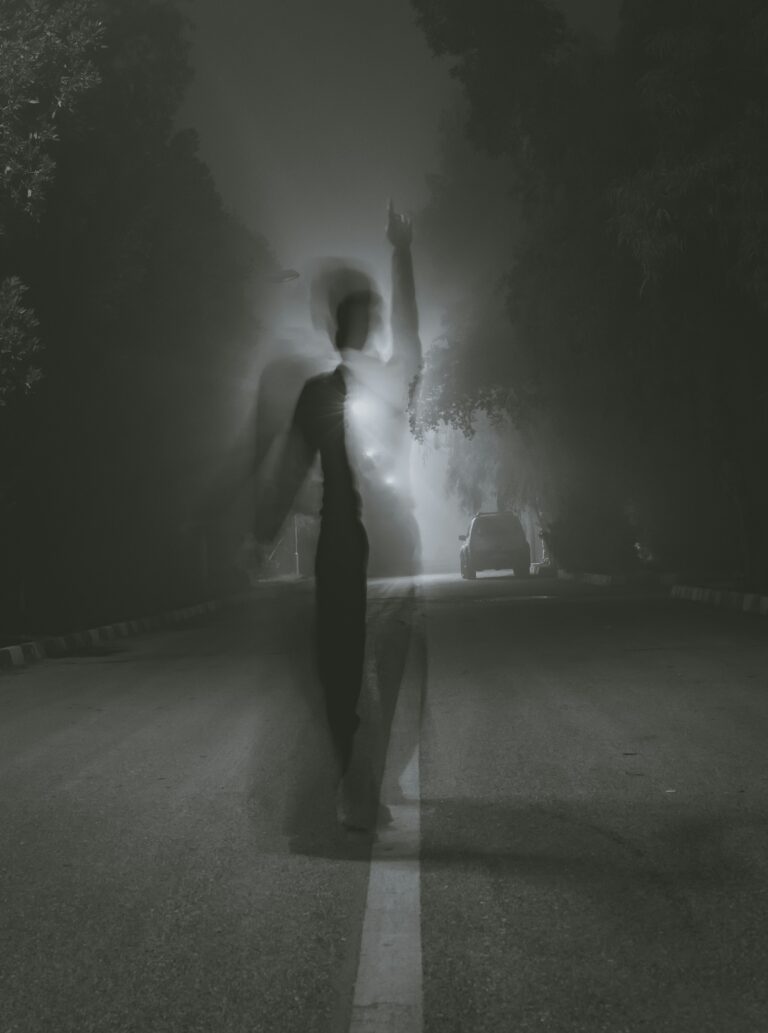
In 2015 I smoked my last cigarette. I snuffed the butt out into an ashtray made of transparent yellow glass and leaned against one of the support posts of my deck.
There was a crescent moon in the sky above my house, and I was convinced that if something didn’t change in my life, this would be the last time I ever looked at one. Resting beside the ashtray was a Ruger .357 magnum revolver with a speckling of patina down the barrel. My father had accepted it as a partial trade on a Chevy Cavalier. The gun had been sitting underneath his bed in a faux leather zip-up case when a six-foot-five stranger beat him to death. Until 2015, it had only been out of that case one other time.
In 1995 I had spun the cylinder on this same gun and heard the loud metallic click of its hammer striking the firing pin on an empty chamber. Russian Roulette is a game for two types of people: idiots and individuals who really want to shoot themselves but are too chicken shit to accept the responsibility of making the decision. The first few rounds I didn’t look. I even closed my eyes a couple of times, but the last time I pulled the hammer into position with my thumb I saw it. A live round was waiting for me. When I cocked the hammer back, the cylinder rotated like gears in a clock and moved the bullet into place. I could see the indentation in the lead as I stared down the barrel. It was a hollow point. When the firing pin ignited the powder inside of the casing, the grooves, known as rifling, would cause the bullet to spin as it traveled down the length of the barrel and into my skull.
I stared at the small hole formed in the center of the bullet and thought about how it would expand onto itself creating a larger wound channel as the force of the exploded powder would push the lead through my brain and out the other side of my skull. This was no longer a game of chance. This would be the last decision I ever made.
I was sitting cross-legged in the back bedroom of a little house my father intended to sell as soon as we were done renovating it. The room was as big of a mess as I feared my life would turn out to be. Cardboard boxes lined the walls where missing baseboards met brown shag carpeting. A single incandescent light bulb dangled from an orange extension cord above a phallic-shaped water stain on the popcorn ceiling above me. The place smelled of mildew and rotting wood.
I set the gun on my knee and draped my fingers across its handle. It was after midnight, and my parents were asleep in the bedroom across the hall. I ran my finger down the rough checkering of the wooden grips and tried to think of a reason not to do it. A year before, my aunt Lisa had locked herself in the bathroom of her house and held the barrel of an SKS assault rifle to her forehead. One of the police officers said it looked like someone had lit a cherry bomb inside a jar of chunky spaghetti sauce.
Her mother and sister had done something similar, both involving .38 special revolvers and back bedrooms. Five years later, my cousin Luke would do the same in the backyard of his father’s house with a hunting rifle. There’s a genetic component to this sort of thing.
I can’t remember when it began, but I know it started growing stronger about the time I was ten. My father was out of work, and my mother was making minimum wage at a discount clothing store downtown. The dilapidated house we were renting from my uncle felt like a step down from the trailer we had been in before. I lived off of cans of Chef Boyardee pasta, which I ate cold because I wasn’t allowed to use the stove, and we didn’t have a microwave. My mother cut my hair once a month on the back porch. We had to position the legs of a kitchen chair over the gaps in between the boards, and we listened to the possums crawling around underneath.
There wasn’t any one thing that set me off. There were lots of things. The bruises I got tired of hiding, the laughs and whispers I got tired of ignoring, and the long walk from the bus stop to the house where my father sat in front of a TV with a black cable running across the living room floor and out the window to the cable box outside.
More than anything it was a feeling. The feeling wasn’t consistent. It came in waves like the blips of an EKG machine searching for electrical impulses in a heart attack victim’s brain. There was a pattern: peaks and valleys, but the valleys were deep, and sometimes they lasted for days or even weeks.
It is hard to describe depression to someone who hasn’t experienced it. The worst part of it isn’t the overwhelming feeling of sadness or the physical lethargy. The worst part is the fear of how deep the blackness will be as you sink to the bottom of it.
I had a Case pocket knife I had inherited from my great grandfather when I turned nine. I kept it underneath a stack of white Hanes briefs in the top drawer of my chest. The handle was chipped and the blade was speckled with rust, but I had managed to sharpen it fairly well with a whetstone my uncle had given me. Some nights I would trace the veins in my wrists and the carotid arteries in my neck with the tip of the blade. I wanted to do it, but I was afraid. It wasn’t the pain that scared me; it was the fear of being found out.
What if someone walked in on me before I could bleed out completely, and they took away my knife? I could stand being alive for now, but what if it got worse later? I never made the decision not to do it. I only decided to postpone the act.
I thought about it from time to time. Sometimes an opportunity would present itself. A semi truck racing past the little two-laned road in front of my elementary school, a well-sealed garage capable of filling up with exhaust fumes, or the ladder on a water tower a half mile from the house we were renting.
In 2015 I lifted the .357 from the railing and pressed the barrel to my temple. Diluting the oxygenated blood in my veins were several ounces of Jack Daniels from an empty bottle with a black label. I was thirty-five years old, and I didn’t want to play the game of life any longer. It was a hot Tuesday afternoon in April, around lunchtime, and my stomach groaned from a lack of food. I had lost all interest in eating sometime during the previous weekend.
Depression is funny that way. Everything doesn’t suddenly go gray like some people think. Instead, it’s a slow loss of color until nothing seems worth doing, seeing, smelling, or tasting. Eventually your senses go numb. Every experience becomes rote, rational, a chore. Try explaining the steps involved in eating a cracker.
I was done with eating. I had spent my breakfast time typing a farewell letter while my wife got ready for work. I stood in the doorway and waved goodbye as she backed out of the driveway. Things had been tense between us lately, and I wanted her last memory of me to be good.
We had been arguing frequently over the past year. It was always about the same thing. When we got together in 2002, neither of us had wanted to have children. A decade later, her mind had changed, but mine hadn’t. For months I had fought back when she brought it up, but lately I would just sit there and let her talk until she was done.
I knew I wasn’t capable of giving a child the type of stability they would need. My mind was rattled with memories of abuse and self-loathing. In the letter, I explained to her how she was still young enough to start over with someone else and have the family she had begged me to give her. I gave her my blessing to remarry.
Most people who take their own lives don’t leave notes behind. I had learned that in 2007 while working as a firefighter in Brandon, Mississippi. There had been a rash of teenage suicides in my district, and only one of them had written a goodbye.
A fourteen-year-old girl had pushed the hangers aside and hanged herself from a wooden support beam high above the ceiling line in her closet. The last thing she ever wrote had been scrawled across a sheet of loose-leaf notebook paper in blue ink. It was half a page of explanation about how no one was to blame, but there was something broken inside of her mind, and she couldn’t take the pain anymore.
I gave her body the last hug she would ever receive as I wrapped my arms around her torso from behind and lifted just enough to make some slack in the rope. My lieutenant cut the cord with the same Gerber pocket knife he used to carve spittoons out of plastic Coke bottles as the girl’s mother wept in the next room.
We set the body down on the floor and waited for the paramedics to arrive. Firefighters and police officers are first responders, but neither group can pronounce death. An hour later, I leaned against the side of the firetruck and smoked a Marlboro Red while the EMS chaplain stood in front of me taking small sips from a Styrofoam cup filled with Folger’s instant coffee.
“There wasn’t nothing anybody could of done,” he said. “There was something wrong with her brain.” He nodded his head after he said it, like he was agreeing with himself or marveling at his own wisdom. “I seen a lot of ’em in my day, and most of the time it ain’t so much the situation as it is the person that’s in it.”
I took a long drag from my cigarette and noticed him grimace as I sucked in the tar and nicotine. He had lectured me before about smoking, but I didn’t think he would on that night. He scratched an itch on the side of his bald head near the temple, the loose flesh moving in the direction of his fingers then holding that shape momentarily.
He took a step towards me and lowered his voice. “Don’t tell anybody I said this, but if they got that in them, it’s usually just a matter of time ’fore they act on it,” he said. “That letter she left was the honest truth. It weren’t nobody’s fault, least of all her’s.” He stepped back to his original place and took a sip of coffee. “She did her family a kindness leaving that note behind, though. It might not help much now, but on down the line it might bring them some peace.”
I thought about that as I held the .357 to my head. In my note I had rambled on about how it wasn’t anyone’s fault for a few lines before signing off with, “I feel like I’ve come to an end of this journey, and I’m ready for the next stage.” I thought leaving it like that might bring a small amount of comfort to anyone religious who read it. Maybe they would think I was referring to heaven or some other form of afterlife.
With the gun’s barrel against my skull, I pulled up the farewell letter on my phone and prepared to mail it to everyone in my contact list. I would send out the message then dial 911 and tell the dispatcher what I was about to do and where to find me. That way my wife wouldn’t be the one to find the body the way my mother had found her husband’s after his murder, my grandmother had found her husband’s after his heart attack, the way my uncle had found my aunt’s after her suicide.
I ran through the to-do list in my mind. Most suicidal people become extremely logical towards the end. Nothing in life excited me anymore. I had mowed the grass an hour before, the bills were paid, the house was clean. I was ready.
I stared across the small community park behind our house and pulled the hammer back on the revolver with my thumb. I’ve heard your life flashes before your eyes at the moment of death, but I’ve never believed that. In my mind raced a collage of things I had never done before. None of them seemed worth doing but one: visiting Japan.
It was a place I had been fascinated with since I was a child. Maybe I had watched too many movies about ninjas and samurais, or maybe it was because the ancient and elegant culture of the country seemed so different from the little Mississippi town I had been raised in. For some reason, I held onto a strange affection for this place I had never been. I hadn’t had the courage to go before. There was always some excuse; it would take too long or cost too much. But if I was about to end my life anyway, why not go? I slid the revolver back inside its case. I still planned to use it, but I would go to Japan first.
I put together a trip and bought tickets for the flight before my wife got home. I found a Froder’s travel guide at Barnes & Noble and started researching the country. I borrowed a CD collection and several books from the library to get a feel for the language and researched the culture and religion online.
The practice of Zen intrigued me. No one claimed to have a definitive answer to all of life’s questions. I read a book by Alan Watts and watched YouTube videos of monks in Japanese temples chanting in unison. I tried meditating in the living room before the sun rose each morning, but I wasn’t sure if I was doing it right.
Sometimes at night I would wake up with the urge to walk out into the park behind my house with the .357, but my upcoming trip gave me a reason to hesitate. My wife slept beside me in the bed unaware of any of the things going through my mind.
The first two weeks of my trip were spent wandering Kyoto and Osaka eating set-meals from 7-Eleven and doing the typical tourist stuff. Japan was an amazing place. There were trails that passed under giant red pagodas to ancient temples that looked like they had been ripped from Kurosawa films, streets lined with cherry blossoms, and deer in a park called Nara that would bow to you if you offered them a rice cake. I saw sumo tournaments where enormous men slammed into each other and wrestled in a sweaty mess of arms, legs and jiggling flesh. Beautiful women in bright kimonos rode the bullet train past vast mountain peaks at incredible speeds to cities that seemed somehow to coexist in the future and past simultaneously. All the things I had dreamed of were there, and they were better than I had imagined. I wanted to get caught up in the excitement of it all, but I couldn’t.
Strolling down the trails felt like walking the sidewalk in my neighborhood back home. The morning air was cold, and the temples were drafty. An Australian tourist spilled his beer on my thigh at a sumo tournament, and the trains were overcrowded.
After the second week, I walked the length of a small curving road alone, and up the path to a Zen monastery in the Wakayama prefecture south of Osaka. Three days’ worth of clothes and a bag of matcha-flavored KitKats jostled around in the small backpack I carried. Mount Koya is the center of Shingon Buddhism. Once you get past the tea houses and shops that sell good-luck charms and large fans covered with prints of giant blue waves, you come to a line of monasteries where travelers seeking enlightenment can stay for a small fee if they are willing to work and abide by the tenets of the community.
For two months, I awoke at 4:00 A.M. to sweep the halls, rake the gardens, and participate in Zazen (a group meditation that involves chanting mantras for long periods of time) while sitting in the seiza position. I lived off rice gruel and vegetables that had been roasted, pickled, or fried in the Portuguese tradition. A young, college-aged monk named Yusuke appointed himself my friend. He told me he had learned English in school and had been to the West “a long time ago.”
At night we would sit in our robes huddled around a small heater sipping green tea from porcelain cups and discuss the similarities and differences between Buddhism and the Southern Baptist religion I had been raised under.
Yusuke began sitting beside me during meditation and at meals. He acted as my translator when the senior monks spoke to me. He was overjoyed when I handed him an individually wrapped miniature KitKat, and he raised an eyebrow when I gave him the copy of Catcher in the Rye I had been carrying with me.
“You are not Holden Caulfield,” he said.
One afternoon, as we were cleaning the temple floor by getting down on our haunches and running the length of the planks with wash cloths, Yusuke asked me why I had really come to the monastery. He didn’t seem surprised when I told him I didn’t feel like I was getting much out of the Spartan existence of the order. The monotony of the daily routine and the blank nothingness of meditation mirrored what I had been feeling at home.
“I’m running from something,” I said.
He set aside his cloth and tucked his legs underneath him. “What?”
“A lot of things. Memories, fears, but most of all just this crazy crap in my head telling me life isn’t worth the hassle of living it.”
Yusuke patted the floor motioning for me to come sit beside him. “The hassle is the point of life,” he said. “The good moments are the rewards the heavens give us for bearing the burdens they know we have to carry.” He put his arm around my shoulder and laughed at the way it made my back stiffen. “Have you ever heard of telomeres?” I shook my head.
He had mentioned being a biologist before he became a monk. I wasn’t sure if he meant he had worked as a biologist, or had studied to become one. Either way, I figured he knew what he was talking about.
He explained that telomeres are proteins at the ends of chromosomes that shorten as you age. How long they are and how fast they shorten is predetermined before you are born. Some stressors, like smoking or emotional trauma, can make them dwindle faster, but nothing can slow them down.
I thought back to what the chaplain had said beside the fire truck. I nodded my head at the inevitability of it. All of us carried things inside that would eventually kill us.
People always ask the same question when they find a loved one hanging from the rafters or slumped over in a back bedroom: why? Even if there’s a note, or an explanation from a doctor, they rarely take much solace from it. They want a reason, they want an answer, and more than anything else they want something to blame.
“You haven’t been eating much at meal times,” Yusuke said. He turned to look me in the eyes. His irises were brown like mine but much softer. Our noses were only a few millimeters apart. “Why did you really come here?”
I turned my head and stared at the indentations in the grain of the dark-stained wooden floor in front of me. I thought about repeating the lie I had been telling everyone who asked me this question, including my wife: to find enlightenment.
“You do not believe in enlightenment, do you?”
I shook my head. One day during zazen meditation, while the monks chanted a deep-throated mantra, I heard a calm voice saying, “Forgive yourself,” over and over again. It was comforting in the moment but disturbing later as I tried to understand what it meant.
I described to one of the monks what had happened, and in broken English he told me that sometimes the heavens give us clues about the questions we should ask ourselves. I shook my head again to clear the memory. I didn’t want any more questions, and the phrase “forgive yourself” hadn’t brought me any peace.
“Then why did you come here?” Yusuke said.
I thought back to every place I had travelled to, all the books I had read, my time as a firefighter, and the moment I booked my flight to Japan. “I thought maybe it would be interesting enough to give me a reason to postpone what I’m afraid I’m getting closer to doing,” I said.
Yusuke took a deep breath and paused for a moment before speaking. He scooted across the floor to place his body in front of mine. We were sitting crossed-legged with our knees touching. “None of us can lengthen our lives,” he said. “We can only choose whether to shorten them or not with our actions.” I thought of the cigarettes, the firefighting turnouts, and the loaded .357 in the top of my closet.
“The length of the life you were given – no matter how long it was meant to be – is your responsibility to live. I cannot say that it will be easy, but you do not seem like someone who does not meet his responsibilities.” He leaned forward and wrapped his arms around mine, squeezing me hard and holding me in place. I didn’t come from an affectionate family, and I can count on my fingers the number of people who have hugged me. Once again, Yusuke laughed as my back stiffened.
Later that night, we sat huddled in front of the heater and ate the last of my KitKats as we sipped our tea. I told him that I had decided to leave in the morning.
“Where will you go?”
“I guess I’ll go home and wait for my telomeres to run out,” I said.
“Just do not do anything to help them along.” I nodded and sipped my tea slowly until I saw the bottom of the cup. A few weeks later, my wife met me at the airport in Austin, Texas. She hugged me hard enough around the neck to cut off the circulation momentarily. When I mimed not being able to breathe, she shook her head and squeezed harder for a moment before releasing her grasp.
“Don’t ever leave me like that again!” She pointed at the small backpack I had been carrying for the past few months. “You drive me crazy sometimes, but I wouldn’t want to do life without you,” she said. I looked down at the backpack straps I held in my left hand and noticed the gold band on my second finger from the end.
Three years later, the same ring rested underneath the head of a newborn baby with eyes like mine, but less cloudy. I supported his head with my left hand and tilted a warm bottle of milk towards his mouth with my right. Two weeks before he was born, I surrendered the .357 in the faux leather case to the police station.
I’m almost forty-five years old, and every time I feel a tingling in my left arm or a pain in my chest, I worry about the things I may have passed down to my son. Still, I’m determined not to let the memory of his father taking his own life be one of them. I’ll always have to face the peaks and valleys. They come and go in a pattern I’ve grown to recognize and accept as an inevitable part of life. I try to focus on the good moments: a warm sip of coffee or tea, a fun-sized candy bar, or a random embrace from someone who really cares.
When I turned in the revolver, the officer who filled out the paperwork asked me where I had gotten it from. When I told him I had inherited the thing, he hesitated and asked if I was sure I wanted to give it up. “Yeah,” I said. “It’s not something I’m ever planning to use.”